Video games are often discussed in terms of their potential downsides, from excessive screen time to disrupted sleep. But research also suggests that playing certain games in appropriate amounts can support a range of cognitive, emotional, and social skills.
The key is context. A fast-paced action game, a cooperative multiplayer title, and a strategy game can place very different demands on the brain and body. Likewise, the benefits of gaming depend on how often someone plays, what they play, and whether gaming fits alongside sleep, exercise, school, work, and relationships.
For parents, students, and young adults, the most useful question may therefore be less “Are video games good or bad?” and more “What can healthy gaming add to a balanced life?”
Key Takeaways
- Some video games can strengthen skills related to attention, spatial reasoning, and problem solving.
- Gaming can provide opportunities to practice memory, decision-making, and coordination.
- Multiplayer games can create meaningful opportunities for social interaction and teamwork.
- Playing games can offer a way to relax and recover from everyday stress.
- Gaming-related interests can develop into educational and career opportunities, including esports and game development.
- Benefits are not automatic: moderation, healthy routines, and appropriate game choices still matter.
1. Video Games Can Support Problem-Solving Skills
Many games require players to identify problems, test solutions, learn from failure, and adapt their strategies. Puzzle games may make this process especially obvious, but problem solving is also central to strategy, adventure, simulation, and role-playing games.
Research published in American Psychologist has described video games as environments that can require planning, reasoning, problem solving, and flexible decision-making. Players frequently receive immediate feedback, allowing them to adjust their approach rather than simply memorize a correct answer.
This can make gaming a form of informal practice in strategic thinking. A player attempting to defeat a difficult opponent, solve a puzzle, or manage limited resources is repeatedly making decisions based on incomplete information.
That does not mean every game automatically improves general intelligence. Instead, the strongest takeaway is that some games provide repeated opportunities to exercise specific cognitive skills.
2. Gaming Can Exercise Attention
Attention is another area in which researchers have identified potential benefits from certain types of games.
Action games, in particular, have received substantial research attention. A meta-analysis published in Psychological Bulletin found that action video game training was associated with improvements in several aspects of visual attention and perception.
Action games can require players to monitor multiple objects, detect important changes quickly, and respond to information while ignoring distractions. These demands may help explain why researchers have found effects on certain forms of attention.
For students, however, gaming should not be treated as a replacement for studying. A game can train particular attentional processes without automatically improving performance in every academic subject. The practical lesson is to recognize gaming as one possible cognitive activity rather than a substitute for schoolwork or other forms of learning.
3. Games Can Strengthen Memory and Learning
Video games frequently require players to remember rules, locations, objectives, characters, patterns, and previous outcomes.
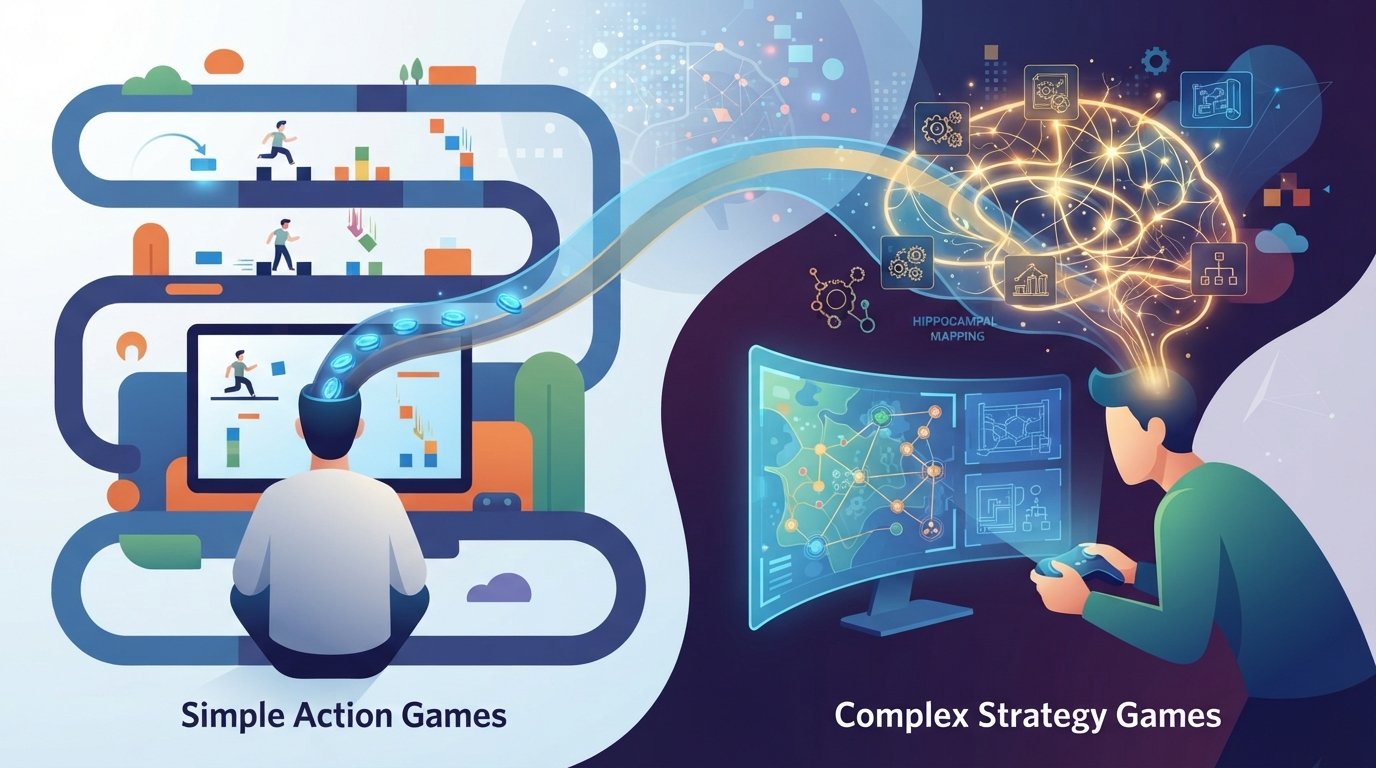
Some games go further by constructing large environments that players must learn to navigate. Research has investigated whether this type of spatial and memory-intensive gameplay can influence cognitive abilities.
A study published in Molecular Psychiatry reported that certain types of video game experience were associated with differences in hippocampal-related memory systems. The researchers also emphasized that different genres could have different relationships with memory.
This distinction is important because gaming is not one uniform activity. A complex strategy game that requires players to remember systems and anticipate consequences is very different from a simple game built around repetitive actions.
For players, choosing games that require exploration, planning, and remembering information may provide more opportunities to engage these abilities.

4. Video Games Can Improve Hand-Eye Coordination
Gaming can demand rapid coordination between visual information and physical movement.
Players may need to track an object on screen while simultaneously moving a character, aiming a cursor, pressing buttons, or manipulating controls. These repeated actions require visual processing, timing, and motor responses to work together.
Research has examined this relationship in several contexts. Some studies have found that experienced video game players can show advantages in certain forms of sensorimotor coordination and visual-motor performance.
The potential benefit is particularly intuitive for games involving precise timing and rapid responses. However, improved gaming performance does not necessarily translate into superior physical coordination in every real-world activity.
Still, games can provide a structured environment in which players repeatedly practice responding to visual information with controlled movements.
5. Multiplayer Games Can Encourage Social Connection
Gaming is not always a solitary activity.
Online multiplayer games can give players opportunities to communicate, coordinate, compete, and cooperate with other people. Teammates may need to divide responsibilities, share information, negotiate strategies, and adapt to one another’s decisions.
Research on multiplayer gaming has found that social interaction can be an important part of the gaming experience. A review in American Psychologist noted that games can support social connection and provide environments for cooperation and interaction.
For young adults and students, multiplayer games can sometimes become another place to maintain friendships. Someone may play with people they know offline or develop friendships through shared gaming communities.
The quality of the interaction matters, though. Toxic communication and harassment can undermine these benefits. Healthy gaming communities are more likely to provide the positive social experiences people are looking for.
6. Games Can Provide Stress Relief and Relaxation
After a demanding day, playing a favorite game can provide a temporary mental break.
Games can capture attention, offer achievable goals, and create an absorbing activity that differs from school or work. Research has explored gaming as a form of leisure and its relationship with mood and stress.
One important concept is the experience of “flow”: becoming deeply absorbed in an activity while concentrating on the task at hand. Games are particularly capable of producing this kind of engagement because they often combine clear objectives, feedback, and challenges that change as the player improves.
That does not make gaming a universal stress treatment. If someone plays for so long that they lose sleep, skip responsibilities, or become more stressed, the activity has stopped serving its intended purpose.
Used deliberately, however, a short gaming session can be one reasonable form of recreation.
7. Games Can Teach Persistence and Adaptability
Failure is built into many video games.
A player may lose a match, fail a mission, choose the wrong strategy, or encounter an opponent who is better prepared. To progress, the player must often analyze what went wrong and try again.
This creates repeated opportunities to practice persistence and adaptation.
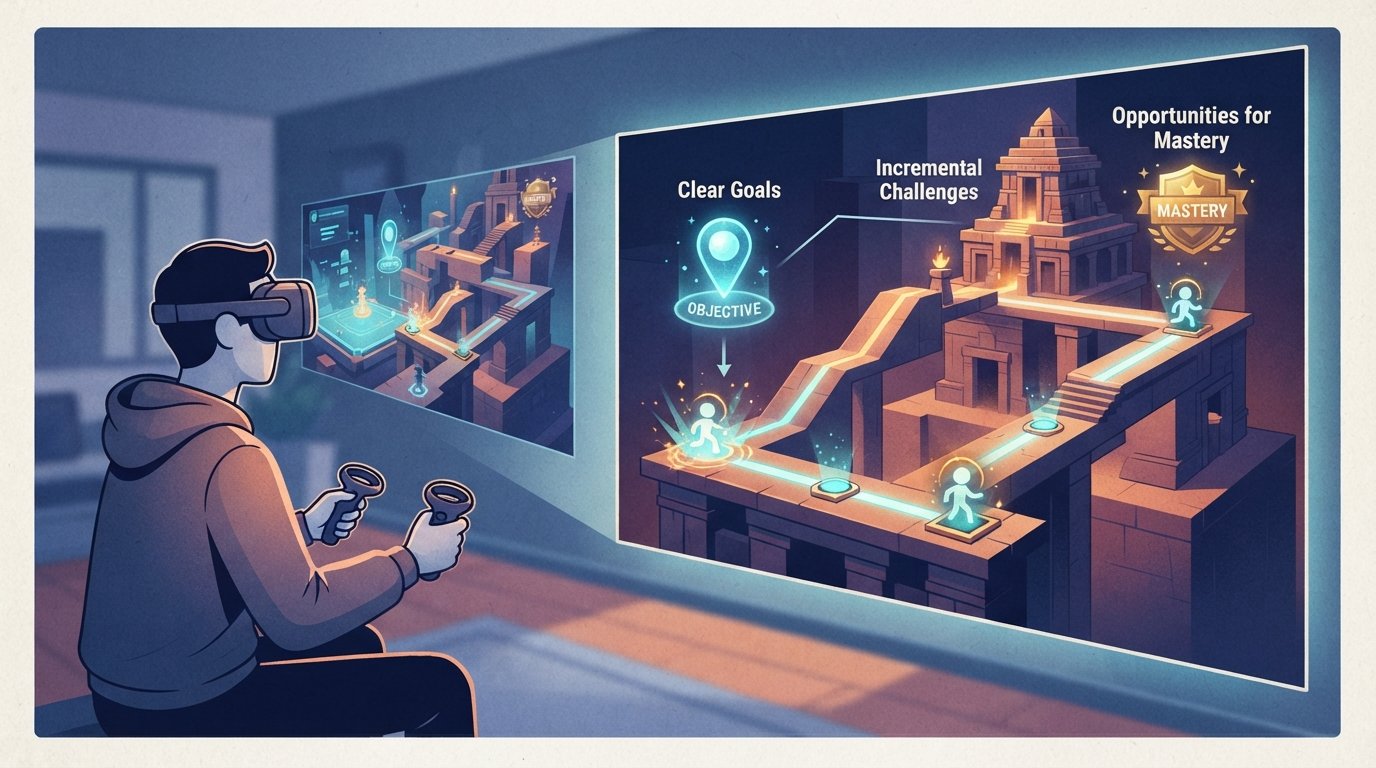
Educational researchers have also examined how games can support motivation through clear goals, feedback, incremental challenges, and opportunities for mastery. These features can make difficult tasks feel manageable because progress is visible.
The lesson should not be overstated: playing games does not automatically make someone more resilient. But game environments can provide repeated practice with failure, experimentation, and improvement.
For parents, this is one reason it can be useful to ask children what they are learning from a game rather than focusing exclusively on how many minutes they have played.
8. Gaming Can Encourage Creativity
Many modern games allow players to create rather than simply consume.
Construction and sandbox games can let players design buildings, landscapes, machines, or entire virtual worlds. Other games encourage storytelling, character creation, customization, or strategic experimentation.
Creative gaming can therefore involve planning, experimentation, spatial reasoning, and self-expression.
Games can also introduce players to concepts that lead beyond gaming itself. Someone fascinated by building virtual environments may become interested in architecture or 3D design. A player who enjoys creating modifications may become curious about programming. Someone interested in storytelling may explore writing, animation, or digital media.
The important distinction is between passive consumption and active creation. Games that give players meaningful tools to build, design, and experiment may offer particularly rich opportunities for creative engagement.
9. Gaming Can Open Doors to Careers and Skills
For some people, gaming develops into more than a hobby.
Competitive players can pursue esports, while others become interested in game design, programming, animation, sound production, writing, user experience, testing, or game journalism.
The broader game-development industry brings together many different disciplines. A successful game requires more than programmers: artists, designers, producers, writers, audio professionals, researchers, marketers, and other specialists can all contribute.
Gaming can therefore serve as an entry point into technology and creative fields. A student who enjoys modifying a game might start learning a programming language. Someone fascinated by character design might explore digital art. A competitive player might develop skills in communication, teamwork, and performance analysis.
A gaming hobby is not a career guarantee, of course. Turning an interest into employment generally requires deliberate education and skill development. But games can provide an accessible starting point for discovering what those skills look like in practice.
10. Games Can Create Opportunities for Learning
Perhaps the broadest advantage is that games can make learning interactive.
Traditional learning often involves reading, listening, writing, or solving exercises. Games can add experimentation and immediate feedback. Players can make decisions and see consequences, often within seconds.
Educational games are an obvious example, but learning can also happen in commercial games. Historical settings can prompt interest in different periods and cultures. Management games can introduce concepts involving resources and trade-offs. Strategy games can encourage players to think about geography, logistics, probability, and long-term planning.
The educational value depends heavily on the game and the way it is used. Simply playing a game with an educational theme does not guarantee meaningful learning. But interactive environments can give learners a different way to engage with concepts and test their understanding.
Moderation Matters: When Gaming Becomes Less Helpful
The potential advantages of video games do not eliminate the importance of balance.
Excessive gaming can interfere with sleep, physical activity, school, work, relationships, or other responsibilities. The World Health Organization recognizes gaming disorder as a condition involving a pattern of gaming behavior characterized by impaired control and continued gaming despite negative consequences.
Healthy gaming therefore starts with the broader routine.
For students, that might mean finishing important schoolwork before beginning a gaming session. For adults, it may mean protecting sleep and exercise rather than allowing late-night gaming to replace them. For families, clear expectations around devices can help children develop healthy habits.
It is also useful to focus on behavior rather than relying only on a universal number of “good” gaming hours. A short session that regularly disrupts sleep can be problematic, while a longer session during a weekend may have a very different effect on someone’s overall routine.
The goal is not necessarily to eliminate gaming. It is to keep gaming in proportion to everything else that supports health and development.
FAQ
Are video games actually good for your brain?
Some types of video games have been associated with improvements in specific cognitive abilities, including aspects of attention, perception, and spatial processing. The effects vary by game type and by the skill being measured, so gaming should not be viewed as a universal brain-training solution.
Can video games help students?
Potentially. Games can provide practice with problem solving, attention, planning, persistence, and information processing. They should complement—not replace—schoolwork, sleep, physical activity, and other learning experiences.
Do video games help people make friends?
Multiplayer games can create opportunities for communication, cooperation, and social connection. The experience depends heavily on the quality of the gaming community and the player’s relationships within it.
How much gaming is healthy?
There is no single amount that is ideal for everyone. A healthier pattern is one in which gaming does not consistently interfere with sleep, exercise, school, work, relationships, or other important activities.
Can playing video games lead to a career?
Yes. Gaming interests can connect with careers in esports, programming, game design, animation, writing, sound, production, testing, and other fields. Turning a hobby into a career generally requires developing relevant skills and education beyond simply playing games.
Conclusion
Research paints a more nuanced picture of video games than the simple idea that gaming is either “good” or “bad.” Certain games can engage attention, problem solving, memory, visual processing, coordination, creativity, and social interaction. Gaming can also provide relaxation and inspire interests that eventually develop into educational or career paths.
At the same time, the benefits depend on the activity and the way it fits into a person’s life. The healthiest approach is not to treat every game as beneficial or every gaming session as harmful. Instead, consider what a particular game asks the player to do, what the player gains from it, and whether gaming remains compatible with sleep, exercise, responsibilities, and relationships.
For parents, students, and young adults, that balanced perspective offers a more useful way to think about gaming: not simply as screen time, but as an activity whose effects can depend on what you play, how you play, and what role it occupies in your life.