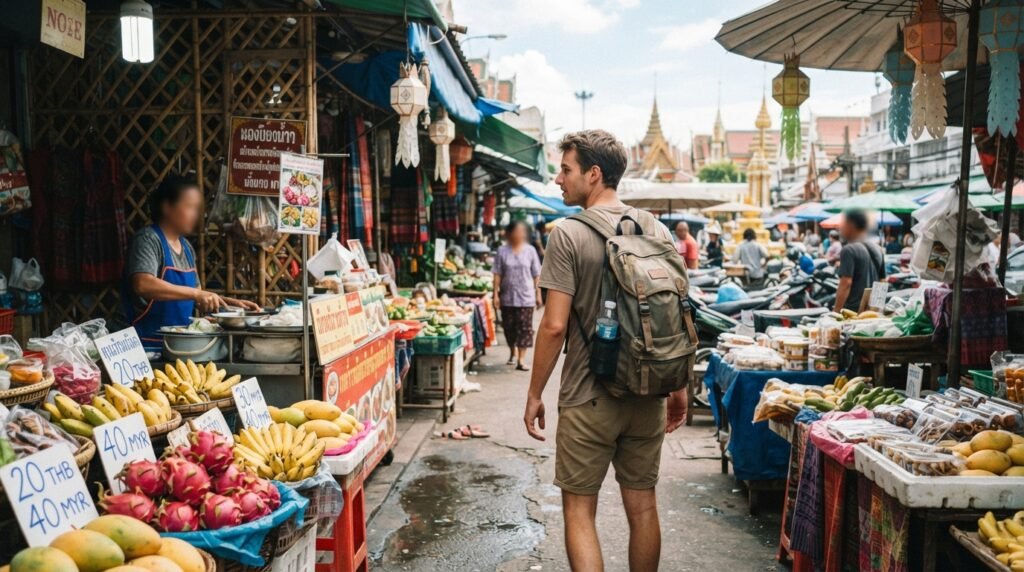
Southeast Asia is one of the world’s most rewarding regions for budget travellers. Affordable accommodation, inexpensive local food, extensive public transport, and a wide range of free or low-cost attractions make it possible to enjoy a memorable trip without spending a fortune.
For travellers from Malaysia, the region is especially convenient. Short flights connect Malaysian cities with major destinations across Southeast Asia, while cultural similarities, familiar foods, and regional transport options can make a first international trip less intimidating.
The key to successful budget travel is not simply spending as little as possible. It is about spending deliberately: choosing the right destinations, travelling at sensible times, eating where locals eat, and saving money on things that do not add much value to your experience.
Key Takeaways
- Set a realistic daily budget before booking anything.
- Start with destinations that have affordable transport and accommodation.
- Use local buses, trains, ferries, and shared transport where practical.
- Eat local food instead of relying on tourist-oriented restaurants.
- Book accommodation based on location and value, not just the lowest price.
- Travel slowly when possible to reduce transport costs.
- Keep an emergency fund separate from your daily spending money.
- Prioritise experiences, safety, and convenience rather than extreme penny-pinching.
Choose the Right Southeast Asian Destination
Southeast Asia includes countries with very different prices, travel styles, and infrastructure. Choosing the right destination can make a significant difference to your overall travel budget.
Thailand, Vietnam, Cambodia, Laos, Indonesia, and the Philippines all offer opportunities for affordable travel, although costs vary between cities and tourist areas. Singapore is considerably more expensive, but it can still be visited on a budget with careful planning.
For Malaysian travellers, nearby destinations can be particularly attractive because flights may be short and competition between airlines can help keep fares reasonable. Cities such as Bangkok, Ho Chi Minh City, Hanoi, Phnom Penh, and Bali are also well-established tourist destinations with a broad range of accommodation and transport choices.
Consider what you actually want from the trip before setting your budget. A beach holiday, food-focused city break, cultural journey, and backpacking adventure will each require different spending priorities.
Set a Daily Travel Budget
Before booking your trip, estimate how much you can comfortably spend each day. Divide your budget into several categories:
- Accommodation
- Food and drinks
- Local transport
- Attractions and activities
- Travel between destinations
- Emergency expenses
For example, one traveller might choose to spend more on accommodation while keeping food and transport costs low. Another might prefer basic accommodation so they can afford tours, diving, or other experiences.
Avoid creating a budget that leaves no room for unexpected expenses. A missed connection, medical visit, replacement phone charger, or last-minute hotel booking can quickly disrupt a tightly planned trip.
A useful approach is to set a daily spending limit while keeping a separate emergency reserve. Treat the reserve as money you do not have available for normal spending unless something genuinely unexpected happens.
Save Money on Flights
For many travellers, international flights are one of the largest individual expenses.
Start by comparing different travel dates rather than searching for only one specific departure day. If your schedule is flexible, travelling midweek or outside major holiday periods may offer better value.
For travellers departing from Malaysia, compare fares from airports that are realistically accessible to you. A slightly cheaper flight from a distant airport may not actually save money once transport, parking, or an overnight stay is included.
Pay attention to baggage fees as well. A cheap base fare can become much more expensive when checked luggage, seat selection, meals, and other extras are added.
Travelling with carry-on luggage can simplify a budget trip considerably. It can reduce fees, eliminate waiting at baggage claim, and make buses and trains easier to use.
Travel Slowly to Spend Less
One of the most effective budget travel strategies is to avoid changing destinations too frequently.
It can be tempting to visit five cities in ten days, but every move involves additional transport costs, time, and sometimes accommodation expenses. You may also end up spending much of your holiday packing and travelling rather than exploring.
Instead, consider staying several nights in each location. A slower itinerary gives you more opportunities to discover inexpensive local restaurants, markets, neighbourhoods, and free attractions.
For example, rather than rushing through several Thai islands, you could spend a few days in one area and explore it properly. The same principle applies whether you are travelling through Vietnam, Indonesia, Cambodia, or another Southeast Asian country.
Choose Affordable Accommodation
Southeast Asia offers accommodation for almost every budget. Hostels, guesthouses, budget hotels, homestays, and simple private rooms can all provide good value.
The cheapest room is not always the best deal. Location matters. Saving a small amount on accommodation may not be worthwhile if you have to spend considerably more on taxis or rides every day.
When comparing accommodation, check:
- Distance from public transport
- Recent guest reviews
- Wi-Fi availability
- Air conditioning or fans
- Security
- Cancellation conditions
- Extra taxes or fees
- Whether breakfast is included
Solo travellers can often save money by choosing a hostel dormitory. Couples or small groups may find that a private budget room offers better value when the cost is divided between two or more people.
For longer stays, ask whether the property offers weekly or monthly rates. Direct communication with smaller guesthouses can sometimes reveal options that are not obvious from booking platforms.
Eat Like a Local
Food is one of the best reasons to travel around Southeast Asia, and it does not have to be expensive.
Local food courts, hawker centres, markets, small family-run restaurants, and street-food areas often offer inexpensive meals with plenty of variety.
Malaysia itself is a great example of how affordable local food can be. Travellers who are comfortable eating at kopitiams, mamaks, hawker centres, and local food courts already have useful experience with this style of budget dining.
The same principle applies elsewhere. Look for places that are busy with local residents rather than restaurants located primarily around major tourist attractions.
However, cheap food should not mean ignoring hygiene. Choose busy establishments where food has a high turnover, observe basic cleanliness, and be sensible about food and water when travelling.
If you have dietary restrictions, learn a few useful phrases in the local language and carry a written translation when necessary.
Use Public Transport
Transport costs can quietly consume a large part of a travel budget.
Whenever practical, use local buses, trains, metro systems, ferries, and shared transport. Many major Southeast Asian cities have affordable public transport networks, while intercity buses and trains can be much cheaper than private transfers.
Ride-hailing services can still be useful, particularly when travelling in a group or when public transport is unavailable. Compare the cost rather than assuming that one option is always cheaper.
For longer journeys, compare the total cost rather than just the ticket price. A slightly more expensive train may save several hours and reduce the need for another night’s accommodation.
Overnight buses and trains can sometimes combine transportation and accommodation costs, although comfort and safety should always come first.
Be Careful With Tourist Extras
Small purchases can have a surprisingly large effect on your travel budget.
Airport snacks, hotel minibar drinks, expensive coffee, souvenir shops, repeated taxi rides, and spontaneous tours may each seem insignificant. Together, they can add hundreds of ringgit to a trip.
This does not mean avoiding all extras. Instead, decide in advance what is worth paying for.
A memorable cooking class, boat trip, national park visit, or cultural experience may be far more valuable than buying souvenirs you do not really want.
Create a small "fun money" allowance for spontaneous purchases. This lets you enjoy the trip without constantly worrying about whether every expense fits the budget.
Take Advantage of Free and Low-Cost Activities
You do not need expensive tours to experience Southeast Asia.
Walking through historic neighbourhoods, visiting public markets, exploring temples where appropriate, relaxing on beaches, hiking accessible trails, visiting public parks, and observing everyday local life can provide some of the most memorable experiences.
Many cities also have inexpensive museums, cultural centres, public gardens, and walking areas.
Research your destination before arriving and make a list of free or low-cost activities. This gives you options for days when you want to spend less.
Remember that some attractions have entrance fees, photography fees, transport charges, or dress requirements. Check the rules before visiting so you can plan accordingly.
Manage Money Safely
Budget travel should never compromise financial security.
Carry more than one payment method and keep some emergency cash separate from your main wallet. Avoid carrying all your money in one place.
Notify your bank about international travel when required and understand the fees associated with overseas withdrawals and card payments.
When exchanging money, compare the total cost rather than focusing only on the advertised exchange rate. ATM fees, bank charges, and dynamic currency conversion can affect the final amount you receive.
It is usually wise to decline dynamic currency conversion when offered by an ATM or card terminal if your bank provides a better exchange rate for the local currency.
Keep digital copies of important documents such as your passport, travel insurance information, and booking details. Store them securely so they can be accessed if your physical documents are lost.
Get Travel Insurance
Travel insurance is an expense that budget travellers sometimes try to eliminate, but it can protect against costs that are impossible to predict.
Depending on the policy, coverage may include medical treatment, trip cancellation, lost baggage, delays, or other travel problems.
Read the policy carefully rather than assuming every situation is covered. Check exclusions, medical coverage limits, activity restrictions, and claim requirements.
The goal is not necessarily to buy the most expensive policy. It is to choose reasonable coverage for the type of trip you are taking.
Pack Light and Practically
Packing less can save money and make travel easier.
Choose versatile clothing that can be washed and worn several times. A lightweight rain jacket, comfortable walking shoes, basic toiletries, a reusable water bottle where appropriate, and essential electronics are usually more useful than a large suitcase full of rarely used items.
Avoid buying specialised travel equipment unless you genuinely need it. Many things marketed as travel essentials are simply conveniences.
For Malaysian travellers, familiar items can sometimes be purchased before departure at lower prices than at tourist destinations. Basic medicines, toiletries, charging accessories, and similar essentials are good examples.
Avoid Common Beginner Mistakes
First-time budget travellers often make the same few mistakes.
One common mistake is planning an itinerary that is too ambitious. Another is choosing the absolute cheapest accommodation without checking its location or reviews.
Some travellers also underestimate transportation costs between destinations. Others spend heavily during the first few days and then have to restrict themselves later.
A simple solution is to track your spending each evening. You do not need complicated accounting. Record accommodation, transport, meals, activities, and miscellaneous purchases.
After several days, you will see where your money is actually going. If you are spending less than expected, you can afford an occasional upgrade. If you are overspending, you can adjust before the problem becomes serious.
A Simple Budget Travel Strategy
For a first trip, keep your itinerary straightforward.
Choose one or two countries rather than trying to see the entire region. Pick a few destinations that are well connected by affordable transport. Reserve accommodation for the first part of the trip, then leave some flexibility if your travel style allows it.
Set a daily spending target and separate your emergency fund from your normal travel money.
Prioritise experiences that matter to you. If you love food, allocate more of your budget to restaurants and markets. If you enjoy nature, spend more on national parks or outdoor activities. If culture is your priority, allow room for museums, historical sites, and local experiences.
Budget travel works best when your spending reflects your priorities rather than someone else’s idea of the perfect trip.
Frequently Asked Questions
How much money do I need for a budget trip to Southeast Asia?
There is no single figure because costs vary significantly by country, city, accommodation type, and travel style. A backpacker staying in hostels and eating local food can spend considerably less than someone using private rooms, taxis, and organised tours. Build your budget around actual accommodation and transport prices for your chosen destinations.
Is Southeast Asia safe for first-time budget travellers?
Many parts of Southeast Asia are well established for international tourism, but normal precautions are important. Protect your valuables, use reputable transport, avoid displaying large amounts of cash, and research local laws and customs before travelling.
Should I book everything in advance?
Not necessarily. Booking flights and accommodation for the first few nights can make a first trip easier, while leaving some flexibility for later parts of the itinerary. During busy periods, however, booking important transport and accommodation earlier may be worthwhile.
Is street food safe?
Street food can be an excellent and affordable way to experience local cuisine. Choose busy vendors with high food turnover, observe preparation and storage practices, and follow local advice about drinking water and food hygiene.
Can I travel Southeast Asia without a large backpack?
Absolutely. A small carry-on bag can be enough for many trips, particularly if you are willing to wash clothes during the journey. Travelling light can make buses, trains, ferries, and budget flights much easier.
Conclusion
Budget travel in Southeast Asia is less about travelling as cheaply as humanly possible and more about making smart choices.
Choose destinations that match your budget, travel slowly, use local transport, eat local food, and select accommodation based on overall value. Keep an emergency reserve, protect your money and documents, and spend more freely on experiences that genuinely matter to you.
For travellers from Malaysia, Southeast Asia offers an especially accessible introduction to international travel. With thoughtful planning and realistic expectations, you can explore vibrant cities, beautiful islands, historic sites, and diverse cultures while keeping your spending under control.
The best budget trip is not the one where you spend the least. It is the one where you return home feeling that your money was spent well.
Pingback: How to Choose the Right Running Shoes for Beginners – psimmarketing.com