
Indoor plants can make a home office feel more comfortable, inviting, and connected to nature, but their value goes beyond decoration. Research on indoor greenery and workplace environments suggests that plants may support well-being, attention, stress management, and perceptions of the workspace.
A home office is an especially useful setting for indoor plants because it is often a space where people spend several hours each day. Unlike a decorative object that simply occupies a shelf, a living plant changes over time and can create a stronger visual connection with the natural world.
That does not mean a few pots of greenery will transform productivity overnight. The benefits of indoor plants are generally modest and depend on factors such as the type of plant, placement, lighting, individual preferences, and the overall quality of the work environment.
Still, adding greenery is a relatively simple way to improve the atmosphere of a workspace. Here are seven potential benefits, along with practical ways to incorporate indoor plants into a home office.
1. Indoor Plants May Help Reduce Stress
One of the most widely discussed benefits of indoor plants is their potential relationship with stress reduction. Exposure to natural elements, including greenery, has been associated with more positive emotional responses and greater feelings of relaxation.
A home office can easily become associated with deadlines, emails, meetings, and unfinished tasks. Introducing indoor plants provides a visual reminder of the natural environment, which may make the room feel less rigid and work-focused.
Some research on plants in workplace environments has found that greenery can be associated with improved psychological well-being and reduced stress-related responses. The exact effect varies from person to person, so plants should be viewed as one supportive feature rather than a treatment for significant stress.
How to use plants for a calmer office
Place a few plants where you can naturally see them during your workday. A plant beside your monitor, on a nearby shelf, or in the corner of the room can provide greenery without competing with your workspace.
Avoid turning your desk into a miniature jungle. Too many objects can create visual clutter, which may undermine the calming effect you’re trying to achieve.
Plants with soft, rounded foliage can also contribute to a gentler visual environment. The specific species matters less than choosing greenery you enjoy looking at and can realistically maintain.
2. Indoor Plants May Support Attention and Concentration
Maintaining concentration is one of the biggest challenges of working from home. Household distractions, notifications, noise, and long stretches of screen time can make it difficult to remain focused.
Research examining natural elements in work environments has suggested that exposure to plants and views of nature may have positive effects on attention and cognitive performance. While the evidence is not strong enough to say that a particular plant will directly increase productivity, greenery can contribute to a more pleasant environment in which to work.
This distinction is important. Indoor plants are not a substitute for good time management, adequate sleep, or a well-designed workspace. Instead, they can be part of an environment that makes sustained work more comfortable.
Designing an attention-friendly plant arrangement
Keep plants near, but not directly on, the primary area where you need uninterrupted concentration. A plant positioned at the edge of your field of vision can add natural interest without becoming a distraction.
Choose plants that do not require frequent attention during working hours. If you’re constantly checking soil moisture or removing fallen leaves, the plant may become another source of interruption.
Simple options such as pothos, snake plants, ZZ plants, and certain varieties of philodendron can work well in offices because they are generally tolerant of ordinary indoor conditions.
3. Indoor Plants Can Make a Workspace Feel More Comfortable
Comfort is easy to underestimate when designing a home office. A room may contain an excellent desk and chair yet still feel sterile or unpleasant.
Greenery can soften hard surfaces such as desks, shelves, walls, and electronic equipment. The contrast between living foliage and office technology can make a workspace feel less institutional and more personal.
This psychological effect can matter because people tend to spend more time in spaces that feel pleasant. Indoor plants may contribute to a comfortable environment that encourages you to settle into work rather than constantly looking for reasons to leave the room.
Match plants to the office environment
Think about the visual character of your room before buying plants. Tall plants can fill an empty corner, while small plants can add interest to shelves or windowsills.
If your office already contains many colors and patterns, simple green foliage may provide balance. In a minimalist room, a larger plant can become a natural focal point.
The goal is not to create a specific design trend. The best arrangement is one that makes your office feel welcoming without interfering with your work.
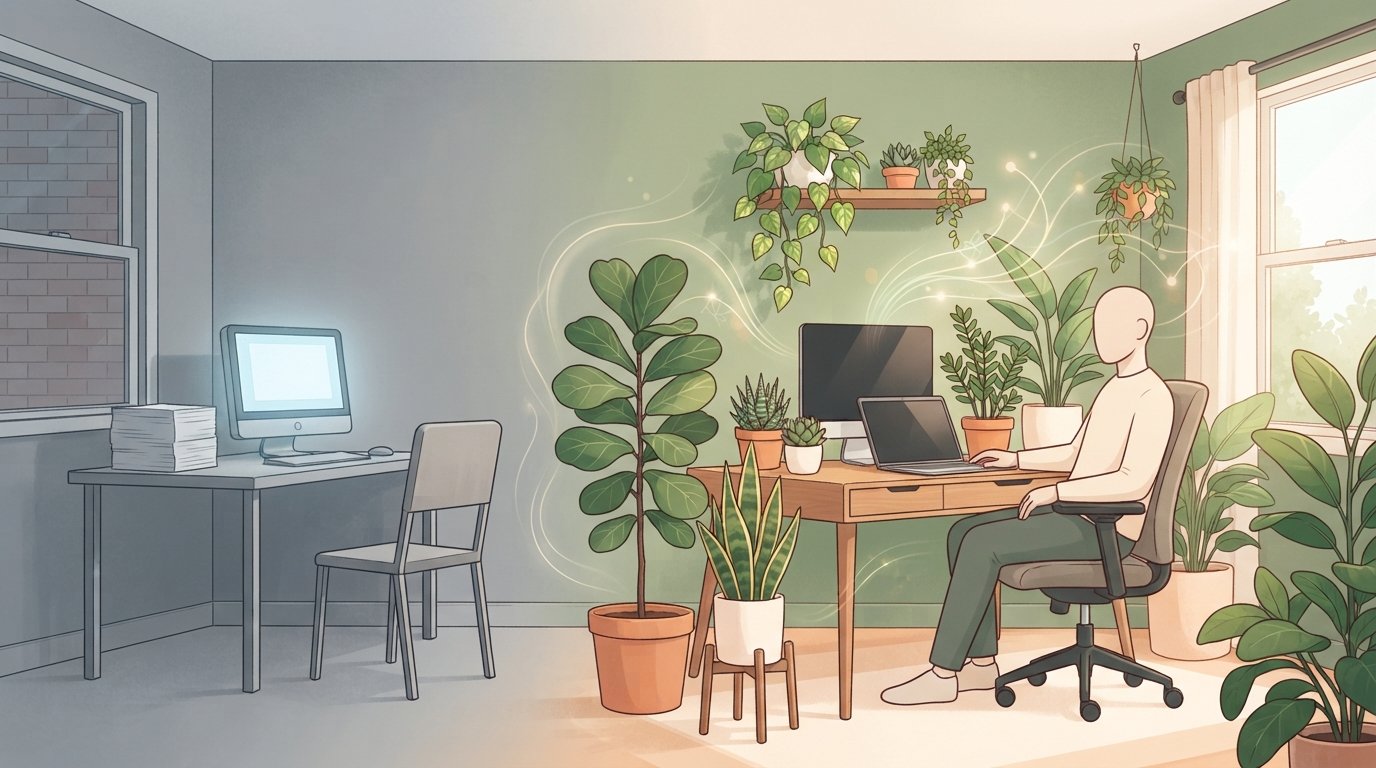
4. Indoor Plants May Improve Perceptions of Air Quality
People often associate plants with cleaner, fresher indoor air. The relationship is more complicated than many popular articles suggest.
Plants can participate in natural processes that affect gases and humidity, and laboratory experiments have demonstrated that plants can remove certain compounds from air under controlled conditions. However, typical homes and offices have ventilation, air exchange, and pollutant concentrations that differ substantially from laboratory setups.
For that reason, ordinary houseplants should not be treated as a replacement for ventilation, filtration, or other measures designed to improve indoor air quality.
Nevertheless, greenery can make a room feel fresher and more natural. Plants can also add a small amount of moisture through transpiration, although the practical effect depends heavily on the number of plants, room size, temperature, and humidity.
Use plants alongside proper ventilation
If air quality is a concern, prioritize fresh-air exchange and appropriate filtration. Keep indoor plants healthy, remove dead material, and avoid chronically overwatering them.
Overwatered soil can encourage mold and fungus gnats, creating problems rather than solving them. Good plant care is therefore part of maintaining a pleasant office environment.
Think of greenery as an environmental and aesthetic addition, not as an air-purification system.
5. Indoor Plants Can Increase Connection With Nature
Many people spend much of their day surrounded by screens, artificial lighting, furniture, and other manufactured objects. A plant introduces something living and changing into that environment.
This connects with the broader concept of biophilic design, which emphasizes incorporating elements of nature into built environments. Plants are one of the most accessible examples because they require relatively little space and can work in almost any decorating style.
The benefits may extend beyond simply seeing green leaves. Watching a new leaf emerge, caring for a plant, or noticing seasonal changes can create small moments of interaction with the natural world.
Create a small biophilic zone
Instead of scattering indoor plants randomly around your office, consider creating one intentional area. A plant stand beside a window, a group of small pots on a shelf, or a larger floor plant near your desk can create a cohesive natural feature.
You can reinforce the effect with natural materials such as wood, stone, cotton, or woven textures. Natural daylight is another valuable element when it is available.
The result does not need to resemble a greenhouse. Even one carefully positioned plant can change the character of a room.
6. Caring for Indoor Plants Can Create Useful Micro-Breaks
Working continuously for hours can make a home office routine feel monotonous. Small breaks can provide opportunities to stand up, change your visual focus, and briefly disengage from the computer.
Plant care can naturally encourage these moments. Watering, checking leaves, rotating a pot, or removing damaged foliage takes only a few minutes and can provide a brief change of activity.
The important point is not that watering plants automatically makes you more productive. Rather, plant care can become a useful cue to step away from the screen occasionally.
Turn plant care into a healthy routine
Avoid using plant maintenance as an excuse to interrupt every few minutes. Instead, incorporate it into existing routines.
For example, you might check your plants when you begin work in the morning or during a planned afternoon break. A quick stretch while checking a nearby plant can combine movement with a small environmental reset.
Choose plants that match the amount of attention you actually want to provide. If you prefer a low-maintenance routine, select species that tolerate occasional missed waterings.
7. Indoor Plants Can Help Personalize Your Home Office
A home office should work for you, not look like a generic corporate workspace. Personalization can make a room feel more comfortable and give it a stronger sense of identity.
Plants offer an especially flexible form of personalization because there are countless shapes, sizes, colors, and growth patterns. You can choose greenery that reflects your taste without making a major permanent change to the room.
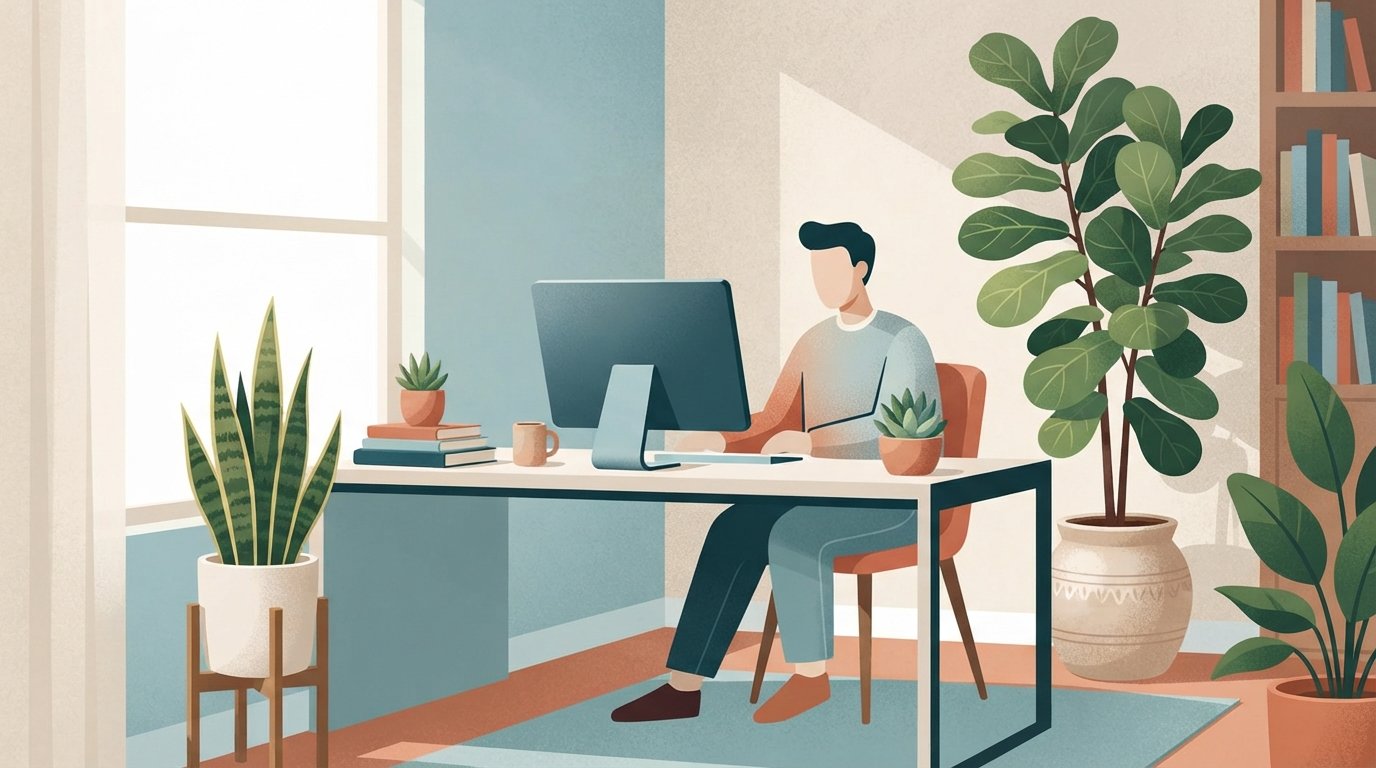
A favorite plant can also become part of the visual identity of your workspace. Over time, its growth can make the room feel dynamic rather than static.
Choose plants based on your habits
The best plant is not necessarily the most unusual or expensive one. It is the plant that fits your environment and your ability to care for it.
If you frequently travel, choose hardy indoor plants that can tolerate periods without watering. If your office has strong natural light, consider plants suited to brighter conditions. For darker rooms, look for plants known to tolerate lower light, while remembering that "low light" does not mean "no light."
Pet owners should also check whether a plant is considered toxic to their animals before bringing it indoors.
How to Choose the Best Indoor Plants for a Home Office
Choosing the right plant begins with understanding the room. Before visiting a nursery or ordering online, consider four basic factors: light, space, maintenance, and temperature.
Light
Light is usually the most important consideration. A plant described as suitable for low light still needs enough usable light to survive.
Observe your office throughout the day. Is there direct sunlight? Bright indirect light? A relatively dim corner? Your answer should guide your plant selection.
A south-facing window can provide very different conditions from an interior office several feet away from any window.
Space
Consider both the plant’s current size and its mature size. A small plant may eventually become a large specimen that crowds your desk or blocks a window.
Floor plants are useful for empty corners, while tabletop plants work well when you have limited floor space. Hanging plants can add greenery without taking up desk or floor area, provided they can be installed safely.
Maintenance
Be realistic about how much care you want to provide. Some people enjoy frequent plant care, while others want greenery that can largely be left alone.
Low-maintenance options can be especially practical for busy home offices. However, even hardy plants need appropriate light, watering, drainage, and occasional maintenance.
Temperature and airflow
Keep plants away from extreme temperature changes when possible. Heating vents, air-conditioning outlets, and drafty windows can create conditions that are stressful for some species.
The ideal placement depends on the individual plant. Check its care requirements rather than assuming every houseplant will thrive in the same location.
Practical Ways to Add Indoor Plants Without Creating Clutter
A successful office arrangement of indoor plants should improve the room without reducing its functionality.
Start with one or two plants rather than buying many at once. This allows you to learn how the room affects them and determine how much maintenance you actually enjoy.
Use vertical space when possible. A tall plant stand or wall-mounted shelf can add greenery while preserving valuable desk real estate.
Keep leaves away from keyboards, monitors, electrical outlets, and other equipment. Water plants away from electronics whenever possible, and use saucers or waterproof trays beneath pots.
Finally, pay attention to visual balance. A large plant on one side of the room may look better when balanced by a smaller natural element elsewhere.
Are More Indoor Plants Better?
Not necessarily. More greenery does not automatically mean greater benefits.
A crowded office can become difficult to clean and maintain. Excessive watering can increase humidity around individual plants and contribute to pest or fungal problems. Large numbers of pots can also compete for space and attention.
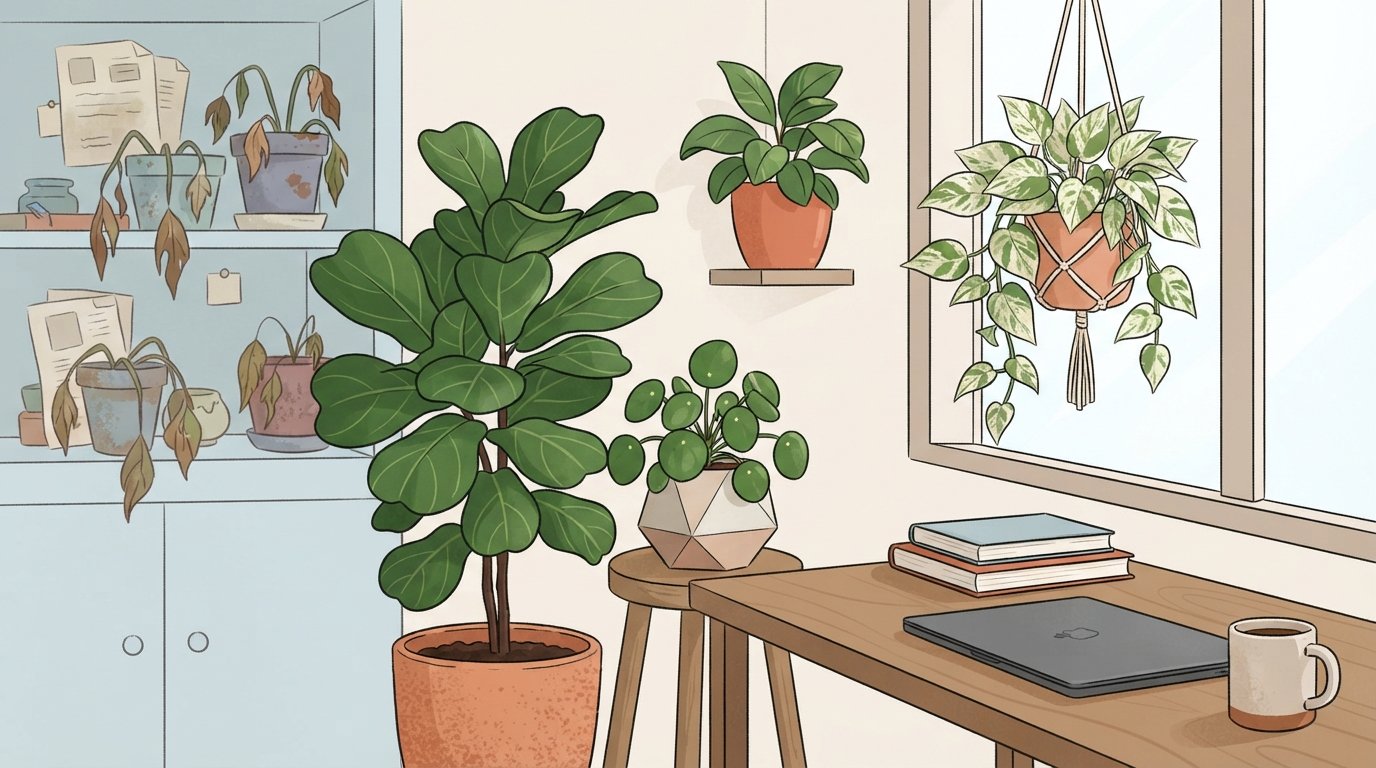
Quality matters more than quantity. A few healthy, well-positioned plants may have a greater practical impact than a collection of neglected specimens.
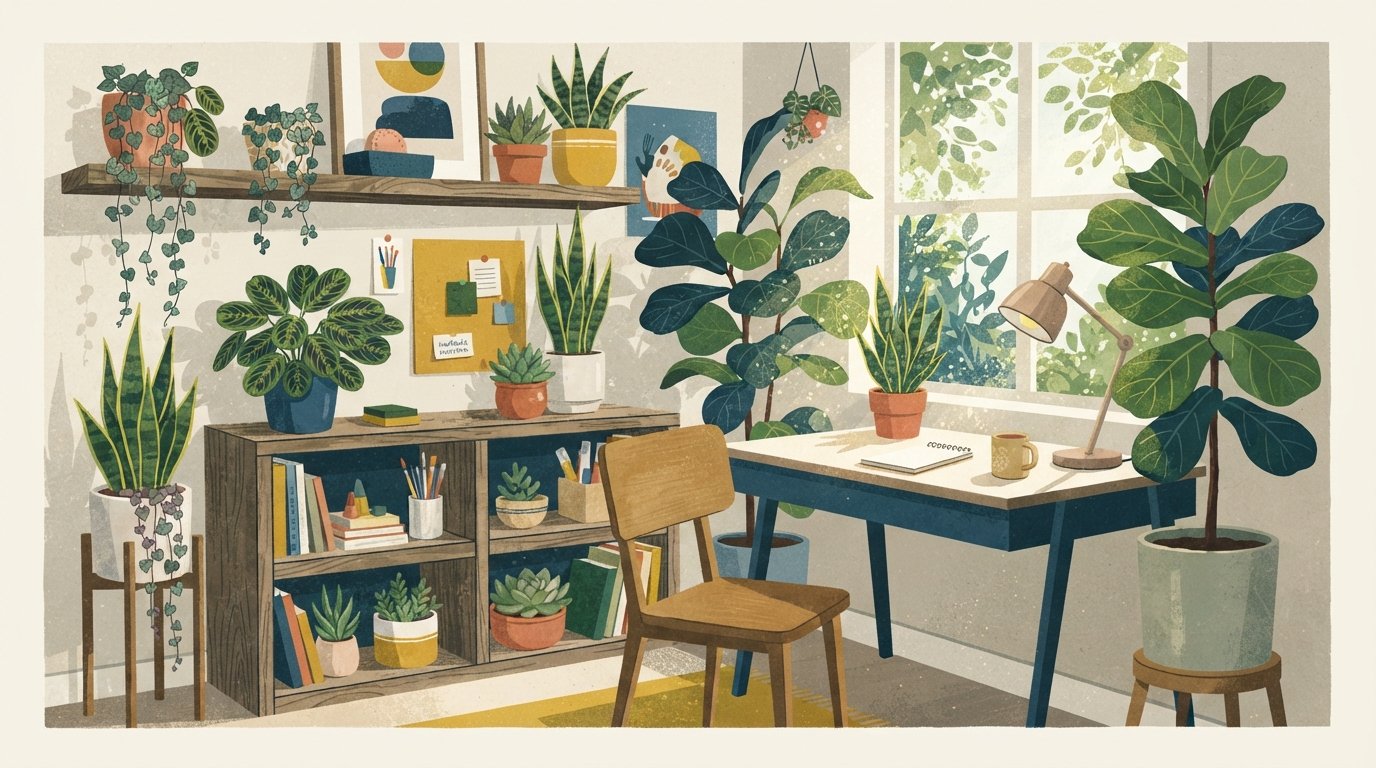
Think about what you want the plants to accomplish. If the goal is to soften the room, one large floor plant may be enough. If you want a stronger connection with nature, a small collection at different heights could work better.
Common Mistakes to Avoid
One common mistake is choosing plants based entirely on appearance. A beautiful plant that requires conditions your office cannot provide will probably struggle.
Another mistake is watering according to a fixed calendar. Indoor conditions vary, so check the soil and the plant’s specific requirements instead of automatically watering every week.
Poor drainage is another frequent problem. Decorative containers without drainage holes can allow water to accumulate around roots, increasing the risk of root problems.
Finally, don’t expect plants to compensate for an uncomfortable chair, poor lighting, excessive noise, or an unsuitable desk. A plant can enhance a good workspace, but it cannot fix fundamental ergonomic problems.
Frequently Asked Questions About Indoor Plants
Do indoor plants really improve productivity?
The evidence suggests that greenery may support aspects of workplace well-being, attention, and satisfaction, but it would be too strong to claim that indoor plants directly increase everyone’s productivity.
The value of indoor plants is better understood as part of the overall environment. A comfortable, pleasant workspace can make it easier to spend time working there.
Which indoor plants are easiest for beginners?
Snake plants, pothos, ZZ plants, and some types of philodendron are commonly considered relatively forgiving choices. Their exact care requirements still vary, so beginners should match the plant to available light and watering habits.
How many plants should I put in my home office?
There is no universal number. Start with one or two plants and evaluate how they affect the room.
A small office may need only a single floor plant or a few small plants. A larger room can accommodate more greenery without feeling crowded.
Can indoor plants replace an air purifier?
No. Houseplants should not be considered a replacement for ventilation or a properly selected air purifier.
Although plants can interact with airborne compounds under certain conditions, real-world indoor environments are more complex than controlled laboratory experiments. Use appropriate ventilation and filtration when air quality is a concern.
Where should I put indoor plants in an office?
Place them where their light requirements can be met without interfering with your work. Windows, shelves, corners, and plant stands can all work depending on the species.
Avoid locations where plants can easily be knocked over or where water could reach electronic equipment.
Are indoor plants good for a dark office?
Some plants tolerate relatively low light, but no ordinary plant can thrive indefinitely without adequate light. If your office has very little natural light, consider a suitable grow light.
Choosing a plant labeled “low light” does not mean placing it in complete darkness.
Can plants make a home office more relaxing?
They may. Research on greenery and natural elements suggests potential benefits for psychological well-being and stress, while many people also find plants visually calming.
Individual responses vary, so choose plants that you personally enjoy having around.
Conclusion
Indoor plants offer a simple way to make a home office feel more natural and inviting. Research suggests potential connections between workplace greenery, stress, attention, well-being, and perceptions of the environment, although plants should not be treated as a cure-all for workplace problems.
The most effective approach is practical. Choose plants that match your available light, space, temperature, and willingness to provide care. Position them where you can enjoy their presence without allowing them to interfere with your work.
Whether you choose a single snake plant beside your desk or create a larger collection around the room, healthy greenery can add life to an otherwise screen-heavy environment. Combined with good ergonomics, appropriate lighting, regular breaks, and a comfortable workspace, indoor plants can become a small but worthwhile part of a healthier home-office routine.
Pingback: 室内植物的7大好处:让居家办公更健康 - psimmarketing.com
Pingback: Kebun Herba: 5 Langkah Mudah - psimmarketing.com
Pingback: 种植香草:阳台新手5个实用技巧 - psimmarketing.com
Pingback: Grow Tomatoes on a Small Balcony: 7 Easy Tips - psimmarketing.com