Why Every Home Cook Should Start a Small Herb Garden Indoors

Fresh herbs can transform an ordinary meal into something special, but buying them at the grocery store often means paying for more than you need. A small indoor herb garden offers a simple, affordable alternative. With just a few pots, some sunlight, and basic care, home cooks can keep fresh herbs within easy reach year-round.
Beyond convenience, growing herbs indoors can make cooking more enjoyable and encourage healthier, more flavorful meals. You do not need a large kitchen, a backyard, or extensive gardening experience to get started.
Fresh Flavor Whenever You Need It
One of the biggest advantages of an indoor herb garden is immediate access to fresh ingredients. Instead of reaching into the refrigerator for a wilted package of parsley or cilantro, you can snip exactly what you need moments before cooking.
Freshly harvested herbs often have a brighter aroma and flavor than dried or older refrigerated herbs. Basil can add freshness to pasta and salads, rosemary works beautifully with roasted vegetables and meats, and mint can brighten drinks, sauces, and desserts.
Growing your own also gives you more freedom to experiment. When herbs are readily available, you may be more likely to add them to dishes that would otherwise seem plain.
Save Money and Reduce Food Waste
Fresh herbs are relatively inexpensive, but their short shelf life can make them surprisingly wasteful. An herb garden can help reduce waste when a recipe calls for only a tablespoon of chopped parsley and the remaining bunch would otherwise sit unused in the refrigerator until it spoils.
An indoor garden lets you harvest small amounts as needed. The plant remains available for future meals, reducing the amount of food you throw away.
You can also start with inexpensive seedlings or seeds and gradually expand your collection. Once you learn which herbs you use most often, you can focus your growing space on those varieties rather than repeatedly purchasing herbs you may not finish.
Choose Herbs That Work Well in Your Herb Garden
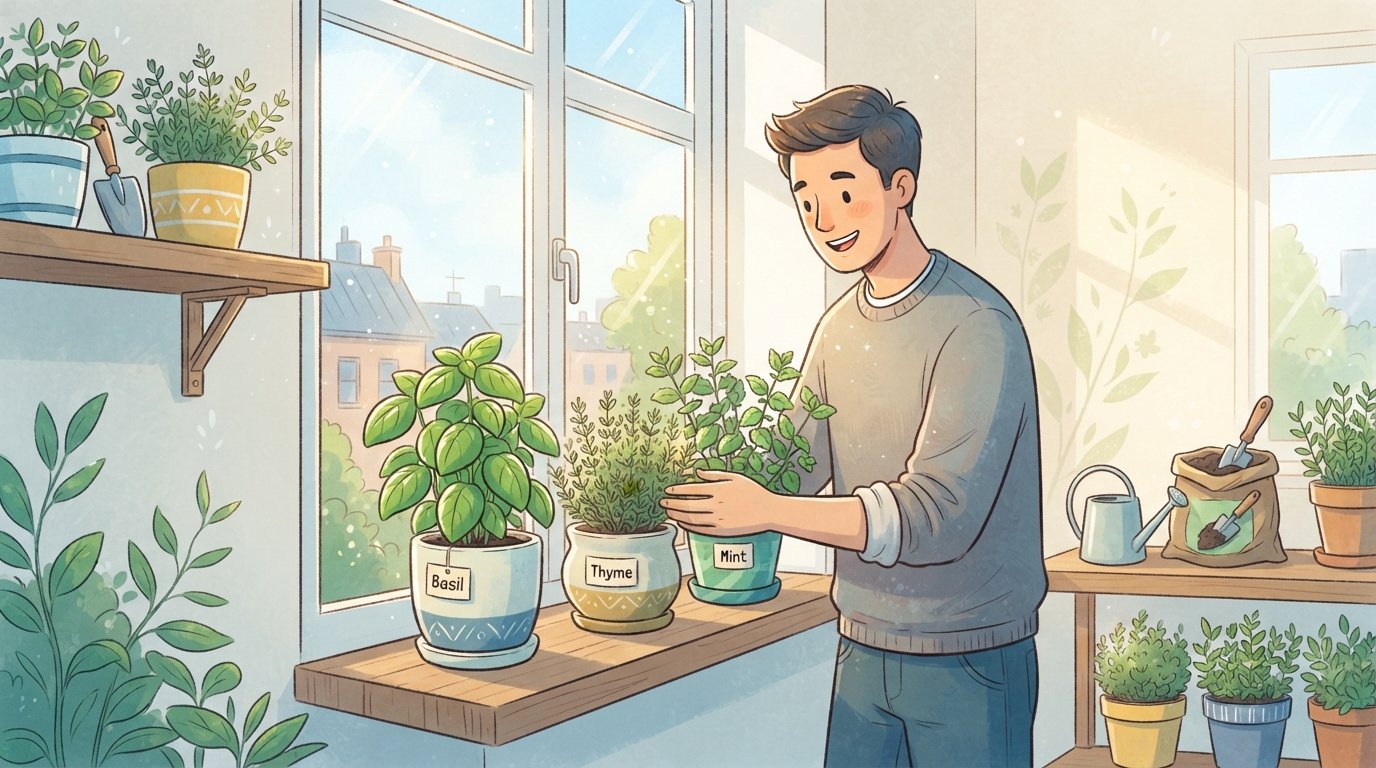
Not every herb requires the same growing conditions, so beginners should start with varieties that adapt well to containers and indoor environments.
Basil is a popular choice for an herb garden because it grows relatively quickly and is useful in many dishes. Chives require little space and can add a mild onion flavor to eggs, potatoes, soups, and salads. Parsley is versatile and can thrive in a sunny indoor location with proper watering.
Mint is another easy option, although it is best grown in its own container because it spreads aggressively. Oregano, thyme, and rosemary are also useful choices, particularly if you have a bright, sunny window.
Start with two or three herbs rather than trying to grow everything at once. A small collection is easier to maintain and gives you an opportunity to learn what works in your home.
Give Your Herbs the Right Conditions
Most culinary herbs need plenty of light. A sunny windowsill that receives several hours of direct sunlight can work well. South-facing windows are often particularly useful, although the best location depends on your home and the time of year.
If natural light is limited in your herb garden, a small LED grow light can help. Position it according to the manufacturer’s instructions and provide a consistent daily light schedule.
Good drainage is equally important. Choose containers with drainage holes and use a quality potting mix rather than dense garden soil. Place a saucer beneath each pot to protect your windowsill or countertop from excess water.
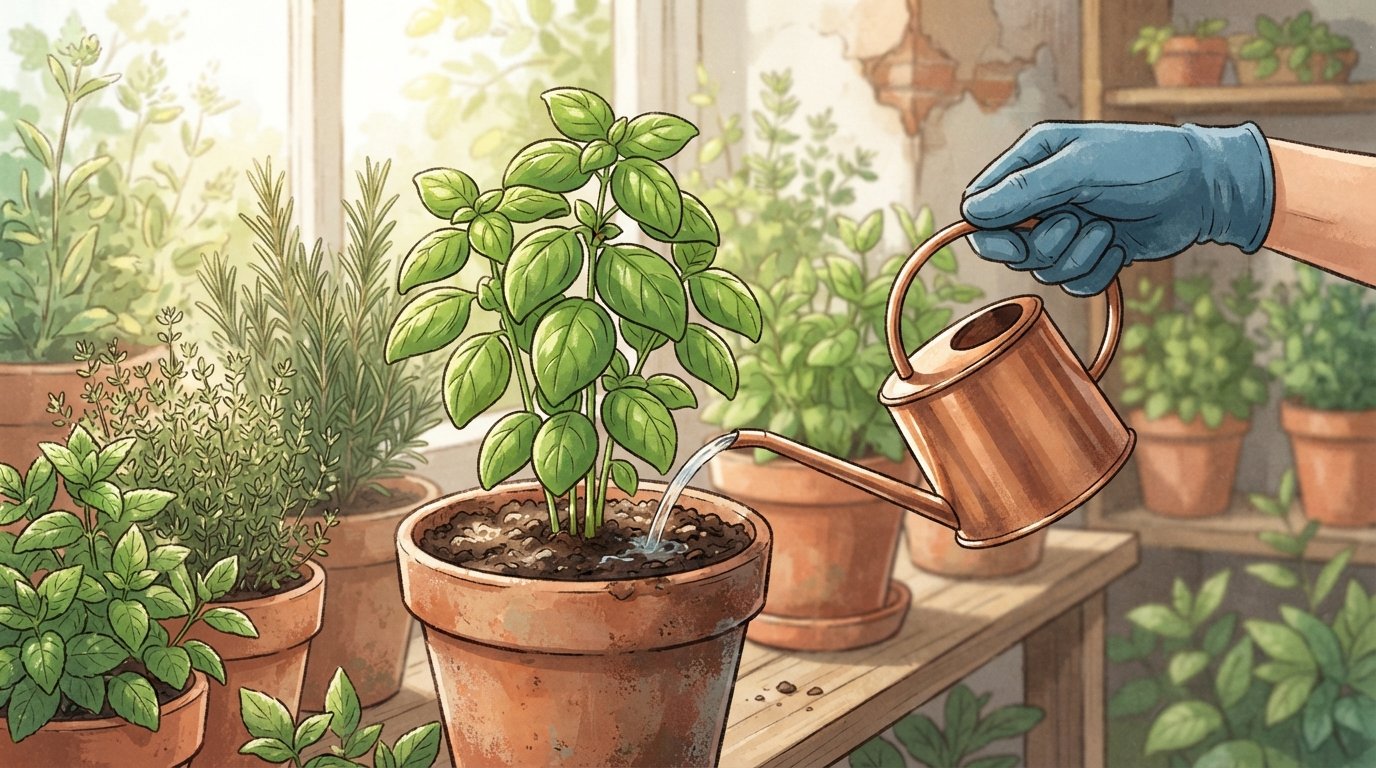
Watering requires some attention. Herbs generally dislike sitting in constantly wet soil. Check the soil before watering, and water when the surface has begun to dry rather than following a rigid schedule. The exact frequency will vary depending on the plant, container, temperature, and amount of sunlight.
Harvest Correctly to Encourage Growth
Regular harvesting can actually help many herbs produce more foliage. Instead of removing large portions of a plant at once, take small amounts as needed.
For leafy herbs such as basil, pinch or cut just above a pair of leaves. This encourages the plant to branch and become fuller in your herb garden. With herbs such as chives, cut the leaves with clean scissors, leaving enough growth for the plant to continue producing.
Avoid harvesting more than the plant can comfortably replace. A healthy indoor herb garden should look productive rather than continually stripped down.
Make Gardening Part of Your Cooking Routine
An indoor herb garden works best when it becomes part of your normal kitchen routine. Before preparing dinner, check which herbs are ready to harvest. Add basil to a tomato sauce, thyme to roasted vegetables, or parsley to a finished soup.
You can also use your herb garden as an opportunity to explore new recipes. If you have an abundance of one herb, search for dishes that feature it prominently rather than allowing the extra growth to go unused.
The process can be rewarding in ways that extend beyond cooking. Watching a small plant grow from a seedling into something you can harvest gives you a direct connection to your food.
9. How to Choose the Best Containers for Indoor Herbs
Choosing the right containers is an important part of creating a successful indoor herb garden. Herbs need enough room for their roots to develop, and the pots should allow excess water to drain away. Containers that are too small can restrict growth, while pots without drainage holes may cause water to collect around the roots.
Terracotta, ceramic, and plastic pots can all work well. Terracotta allows moisture to evaporate through its porous sides, which can be helpful for herbs that prefer drier soil. Plastic containers retain moisture longer and are generally lightweight and easy to move.
Consider these tips when selecting containers:
- Choose pots with drainage holes to prevent waterlogged soil.
- Select containers large enough to accommodate the mature size of each herb.
- Use saucers underneath pots to protect windowsills and countertops.
- Avoid overcrowding several herbs in one small container.
- Label containers so you can easily identify different varieties.
If you want to grow several herbs, consider using individual pots rather than placing everything in one large planter. Different herbs have different watering and growing requirements, so separate containers make it easier to provide appropriate care.
10. Understand Which Herbs Grow Best Indoors
Not every herb responds equally well to indoor growing conditions. Some adapt easily to containers and kitchen windowsills, while others need more sunlight, space, or attention. Choosing suitable varieties from the beginning can make your herb garden easier to maintain.
Basil, parsley, mint, chives, and oregano are popular choices for indoor growing. They offer different flavors and can be incorporated into a wide range of everyday meals.
Here is what to consider when choosing common kitchen herbs:
- Basil: A useful choice for pasta, salads, sandwiches, and homemade sauces. It prefers warmth, bright light, and consistently moist soil without becoming waterlogged.
- Parsley: A versatile herb that works well in soups, salads, and garnishes. It benefits from regular watering and sufficient light.
- Mint: Excellent for drinks, desserts, and savory dishes. It grows vigorously, so keeping it in its own container helps prevent it from taking over other plants.
- Chives: A compact option with a mild onion-like flavor. They are useful for potatoes, eggs, salads, and dips.
- Oregano: A flavorful addition to Mediterranean-inspired cooking. It generally prefers plenty of sunlight and soil that can dry slightly between waterings.
- Thyme: A relatively compact herb that pairs well with vegetables, roasted dishes, and soups. It prefers bright light and good drainage.
Start with two or three varieties rather than purchasing a large collection immediately. Once you understand how much space, sunlight, and attention each plant requires, you can gradually expand your indoor herb garden.
11. Should You Grow Herbs From Seeds or Buy Starter Plants?
One common question for beginners is whether it is better to grow herbs from seeds or purchase young plants. Both approaches can work, but the best option depends on your experience, patience, and preferred varieties.
Growing from seeds gives you more control over the varieties you choose. It can also be an affordable way to grow several plants. However, seeds require patience and suitable conditions for germination. Some herbs take longer than others to develop into plants that are ready for regular harvesting.
Starter plants offer a more immediate way to begin. You can purchase young herbs from a garden center, transplant them into suitable containers, and start learning how to care for them.
Consider the advantages of each approach:
- Seeds: Often economical, offer variety, and provide an opportunity to learn about the complete growing process.
- Starter plants: Convenient for beginners, provide an established plant, and allow you to begin harvesting sooner in many cases.
- Cuttings: Some herbs, particularly mint, can be propagated from healthy cuttings, offering another way to expand your collection.
If you are new to gardening, purchasing a few healthy starter plants is a practical approach. You can experiment with seeds later once you become more comfortable managing watering, lighting, and plant growth.
12. Use the Right Soil and Fertilizer for Healthy Herbs
The soil in your herb garden containers plays an important role in the health of your plants. Ordinary garden soil is not always suitable for indoor containers because it can become compacted and may not drain properly.
Choose a quality potting mix designed for container gardening. A suitable mix should provide enough structure for roots while allowing excess water to escape. Good drainage is especially important for Mediterranean herbs such as thyme and oregano.
Avoid filling pots with soil collected directly from your backyard. It may contain unwanted pests, weed seeds, or other materials that are not ideal for indoor growing.
Fertilizer can also support healthy development, but herbs generally do not need heavy feeding. Too much fertilizer can encourage excessive leafy growth and may affect the intensity of their flavor.
A few practical guidelines include:
- Follow the feeding instructions on the fertilizer packaging.
- Choose a fertilizer appropriate for edible plants.
- Avoid applying fertilizer to dry soil if the product instructions recommend moist soil.
- Reduce feeding when plant growth slows.
- Do not assume yellow leaves always indicate a need for fertilizer; watering and lighting problems can produce similar symptoms.
A balanced approach to soil and feeding helps create a healthier growing environment without making indoor gardening unnecessarily complicated.
13. How to Water Indoor Herbs Without Overwatering
Watering is one of the most common challenges for beginners. Many people assume that herbs need water every day, but the correct frequency depends on the plant, container, soil, temperature, and amount of sunlight.
Overwatering can be just as damaging as underwatering. When soil remains excessively wet, roots may struggle and become vulnerable to rot. On the other hand, allowing certain herbs to become extremely dry can cause wilting and slow growth.
Instead of following a rigid watering schedule, check the soil before adding more water.
Insert a finger into the top layer of soil. If it feels dry, the plant may need watering. If it still feels damp, wait and check again later. Some herbs prefer consistently moist conditions, while others benefit from allowing the soil to dry slightly between waterings.
When watering your herb garden:
- Water slowly until excess moisture begins to drain from the bottom.
- Empty saucers so pots do not sit in standing water.
- Check individual plants rather than watering every container automatically.
- Pay attention to changes in leaf color and texture.
- Adjust watering as indoor temperatures and seasonal conditions change.
Remember that small pots may dry out more quickly than larger containers. Monitoring your plants regularly will help you understand their individual needs.
14. Keep Your Indoor Herb Garden Safe From Pests
Indoor herbs can still attract pests, even when they are grown in a clean kitchen. Small insects may arrive on newly purchased plants, through open windows, or from contaminated potting materials.
Common problems include aphids, spider mites, and fungus gnats. These pests can affect plant health if they are allowed to multiply.
Inspect new plants before bringing them into your herb garden. Look underneath leaves, around stems, and near the soil surface. Early detection makes pest management much easier.
If you notice insects, consider these practical steps:
- Separate the affected plant from healthy herbs.
- Remove badly damaged leaves when appropriate.
- Gently rinse leaves to remove visible pests.
- Avoid keeping soil constantly wet, especially if fungus gnats appear.
- Clean pots and surrounding surfaces regularly.
- Use products specifically labeled for edible plants, following all instructions carefully.
Good air circulation and appropriate watering also help maintain healthier growing conditions. Avoid placing too many containers close together, as crowded plants are harder to inspect and maintain.
Make pest checks part of your regular gardening routine. A quick inspection while watering or harvesting can help you catch problems before they spread.
15. Troubleshooting Common Indoor Herb Garden Problems
Even with careful attention, indoor herbs may occasionally develop problems. Understanding the possible causes can help you respond before a small issue affects the entire plant.
Why are my herb leaves turning yellow?
Yellow leaves can result from overwatering, insufficient light, nutrient problems, or natural aging. Check the soil moisture first and make sure the container drains properly. Also consider whether the plant receives enough sunlight.
Why is my basil growing tall and thin?
Leggy growth often indicates insufficient light. Move the plant to a brighter location or provide suitable supplemental lighting. Regular harvesting and pinching can also encourage bushier growth.
Why are my herbs wilting even though I water them?
Wilting does not always mean a plant needs more water. Roots affected by excessive moisture may struggle to absorb water properly. Check the soil before adding more.
Why are my herbs losing their flavor?
Flavor in an herb garden can vary with the variety, growing conditions, plant maturity, and harvesting practices. Make sure plants receive suitable light and avoid excessive fertilizing.
Why has my herb stopped growing?
Slow growth may be related to limited light, unsuitable temperatures, restricted roots, or seasonal changes. Review the plant’s growing requirements before making adjustments.
The key is to change one condition at a time whenever possible. This makes it easier to identify what is helping and prevents unnecessary stress to your plants.
16. Make the Most of Small Spaces With a Vertical Herb Garden
A lack of countertop space does not mean you have to give up on growing fresh herbs. Vertical gardening offers another way to organize plants while keeping them accessible.
A vertical herb garden can use wall-mounted planters, tiered shelves, hanging containers, or a narrow plant stand. These arrangements are particularly useful in apartments and kitchens where available surface space is limited.
Before installing a vertical setup, consider the amount of natural light available. Every plant needs suitable lighting, and lower shelves may receive less sunlight than upper ones.
Choose an arrangement that allows you to reach each container comfortably. You should be able to water, prune, inspect, and harvest your herbs without moving several other plants.
Keep these points in mind:
- Use secure shelving that can support the weight of pots and wet soil.
- Make sure containers have suitable drainage.
- Protect walls and floors from excess water.
- Position herbs according to their individual light requirements.
- Leave enough space for leaves and stems to develop.
A simple tiered shelf near a bright window can be just as effective as a more elaborate wall-mounted arrangement. The best design is one that makes daily plant care convenient.
17. How to Preserve Fresh Herbs When You Have More Than You Need
A productive herb garden may occasionally provide more fresh leaves than you can use immediately. Instead of allowing extra herbs to wilt, you can preserve them for future meals.
One straightforward option is refrigeration. Tender herbs such as parsley and cilantro can often stay fresh longer when their stems are placed in a small amount of water and the leaves are loosely covered. Storage methods vary, so check the condition of the herbs regularly.
Freezing is another useful approach. Chop suitable herbs and place them in small freezer-safe containers or ice cube trays. You can add a little water or oil when appropriate for the intended recipe.
Drying is particularly useful for herbs such as oregano, thyme, and rosemary. Gather small bunches and dry them in a clean, well-ventilated location away from excessive moisture. Once completely dry, store the leaves in airtight containers.
For best results:
- Harvest healthy leaves rather than damaged or diseased material.
- Wash herbs when necessary and dry them thoroughly before storage.
- Label containers with the herb name and storage date.
- Keep dried herbs away from heat, moisture, and direct sunlight.
- Use preserved herbs in cooked dishes where their texture is less important.
Preserving extra harvests helps reduce food waste and makes your indoor herb garden useful even when fresh plants are growing slowly.
18. Frequently Asked Questions About Growing an Indoor Herb Garden
Can I grow an herb garden without a sunny window?
Yes. Natural sunlight is helpful, but a suitable full-spectrum grow light can provide supplemental lighting for an herb garden when your kitchen does not receive enough sunlight. Choose lighting appropriate for indoor edible plants and follow the manufacturer’s placement recommendations.
How many herbs should a beginner grow?
Starting with two or three varieties is usually manageable. This allows you to learn how different plants respond to your indoor conditions before expanding your collection.
Can different herbs share the same pot?
Some herbs can share a container if they have similar watering, lighting, and space requirements. However, growing them separately is often easier for beginners because individual plants can receive more specific care.
How long does an indoor herb garden last?
It depends on the herb variety and growing conditions. Some herbs are perennial and can continue growing with appropriate care, while others are shorter-lived or may need to be replanted.
Can I grow herbs in my kitchen all year?
Many herbs can grow indoors throughout the year if they receive suitable light, water, and temperatures. Growth may slow during darker months, so supplemental lighting can be helpful.
Are herbs grown indoors safe to eat?
Generally, yes, provided they are grown in clean containers and suitable potting materials, kept free from harmful contamination, and treated only with products approved for edible plants. Wash harvested leaves before using them in food.
What is the easiest herb to grow indoors?
Mint and chives are often approachable choices for beginners. Basil and parsley are also popular, although they require attention to their particular light and watering needs.
Starting an indoor herb garden does not require perfection. Choose plants you enjoy cooking with, provide suitable growing conditions, and learn from how they respond. With consistent care, even a small collection of pots can become a practical source of fresh flavor in your kitchen.
Conclusion
A small indoor herb garden is one of the easiest ways for a home cook to improve everyday meals. It provides fresh flavor on demand, can reduce food waste and grocery costs, and requires surprisingly little space.

Start with a few versatile herbs, give them adequate light and drainage, and learn to water and harvest thoughtfully. You do not need to become an expert gardener to enjoy the benefits. With a few pots on a sunny windowsill, fresh herbs can become a permanent and useful part of your kitchen.
Pingback: indoor plants: 7 Proven Benefits - psimmarketing.com
Pingback: Panduan Ringkas Memulakan Kebun Herba di Rumah Anda Sendiri - psimmarketing.com
Pingback: 在家里的阳台上种植香草的实用入门指南 - psimmarketing.com
Pingback: Grow Tomatoes on a Small Balcony: 7 Easy Tips - psimmarketing.com