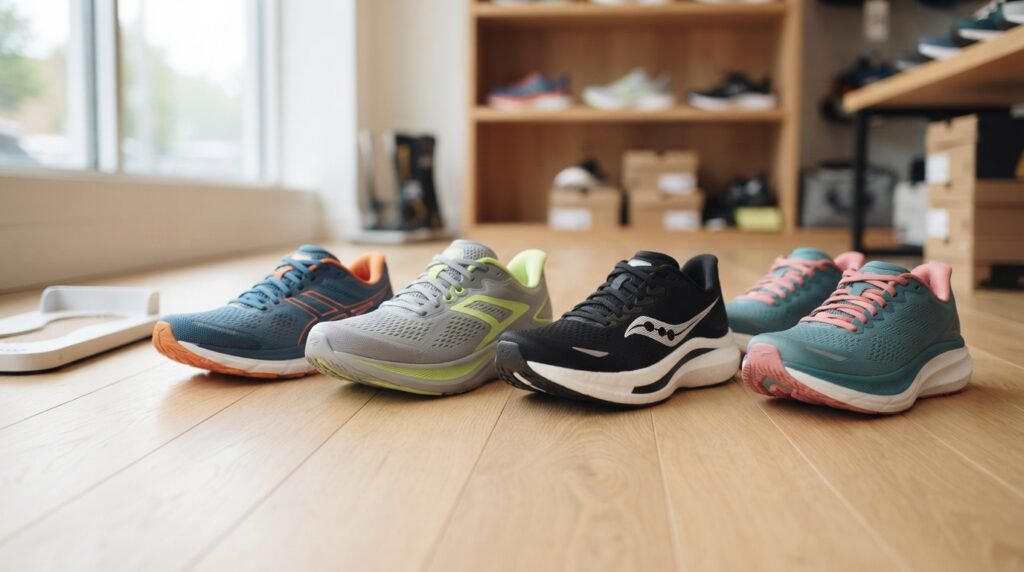
Starting to run can be exciting, but choosing your first pair of running shoes can feel surprisingly complicated. With so many brands, models, cushioning levels, and designs available, it is easy to wonder which shoes are actually right for you.
The good news is that beginners do not need the most expensive or highly technical shoes. The best running shoes are those that feel comfortable, fit properly, suit your running surface, and work well with the way you move.
For new runners, comfort should be the starting point—not marketing claims, complicated shoe categories, or someone else’s favorite model.
Key Takeaways
- Choose running shoes based on comfort, fit, and intended use.
- Try shoes on in the afternoon, when your feet may be slightly larger than in the morning.
- Leave about a thumb’s width of space between your longest toe and the front of the shoe.
- Consider where you will run, such as roads, treadmills, tracks, or trails.
- Wear the socks you normally use for running when trying shoes on.
- You do not need the most expensive shoe to get started.
- Replace running shoes approximately every 500–800 km, or sooner if they show significant wear or no longer feel supportive.
1. Start With Comfort
For beginners, comfort is one of the most useful guides when choosing a running shoe.
A shoe should feel comfortable almost immediately. You should not have to convince yourself that it will become comfortable after several runs. Although some shoes may feel slightly different from what you are used to, there should be no painful pressure, pinching, rubbing, or uncomfortable slipping.
Pay attention to how your feet feel while walking and, if possible, jogging in the shoes. Try several different models rather than deciding based only on appearance.
Cushioning is another factor to consider. Some runners prefer a soft, cushioned feeling, while others like a firmer and more responsive shoe. Neither is automatically better. The right choice depends largely on personal preference and what feels comfortable during movement.
If you are just beginning, prioritize a shoe that allows you to move naturally and comfortably rather than one with the most features.
2. Get the Right Fit
A comfortable shoe can still cause problems if it is the wrong size or shape.
One useful tip is to shop for running shoes in the afternoon. Feet can naturally swell and become slightly larger throughout the day, so trying shoes later can help you avoid selecting a pair that feels comfortable in the morning but becomes too tight during a run.
When standing in the shoes, leave approximately a thumb’s width of space between your longest toe and the front of the shoe. Your toes should have enough room to move without being squeezed together.
The heel, meanwhile, should feel secure without being painfully tight. Your foot should not slide excessively when you walk or jog.
Also check the width. If the sides of your feet feel compressed, simply going up a size may not solve the problem. A wider version of the shoe may provide a better fit.
Remember that shoe sizes and shapes can vary between brands and models. Treat the printed size as a starting point, not an absolute rule.
3. Consider Your Running Surface
Think about where you expect to do most of your running. The surface you choose can help determine which type of running shoe makes the most sense.
Road Running
Road-running shoes are designed primarily for paved surfaces such as streets, sidewalks, and paved paths. They are a practical choice for beginners who plan to run around their neighborhood or on city roads.
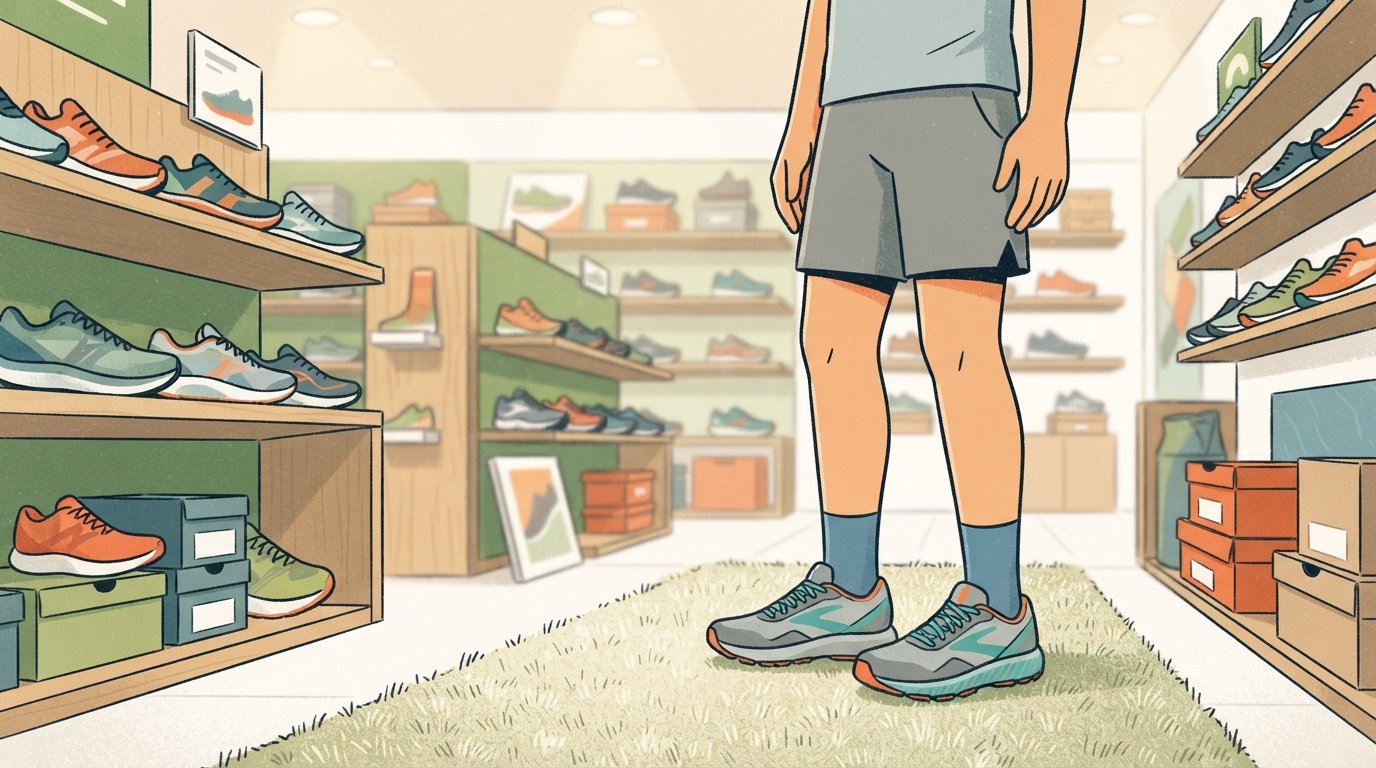
They commonly have cushioning designed to provide a comfortable ride on relatively smooth, hard surfaces.
Treadmill Running
If most of your running takes place on a treadmill, a comfortable road-running shoe is often a sensible starting point. Since treadmills provide a relatively predictable and even surface, you generally do not need aggressive traction designed for rough trails.
Track Running
Beginners who run on a standard running track can usually use comfortable road-running shoes for general training. Specialized track shoes are not necessary for someone simply building a running habit.
Trail Running
Trail running introduces uneven ground, rocks, mud, roots, and other obstacles. Trail shoes typically have outsoles designed for greater traction and construction intended for off-road conditions.
If you regularly plan to run on trails, look for shoes specifically designed for that environment rather than assuming ordinary road shoes will perform the same way.
4. Think About How Often You Will Run
Your training plans should influence your shoe choice.
Someone who plans to walk and jog a few times a week may have different needs from a runner preparing for longer distances. If you are starting with short, easy sessions, a comfortable everyday running shoe can be an excellent choice.
As your running develops, you may eventually want different shoes for different purposes. However, beginners generally do not need a large collection of specialized footwear.
Start with one dependable pair. Learn what you like and dislike about it. Your experience will make future shoe decisions much easier.
5. Pay Attention to Cushioning
Running shoes come with different levels of cushioning, from relatively minimal designs to highly cushioned models.
More cushioning does not automatically mean a better shoe. Some runners enjoy a soft, protective sensation, while others prefer a more direct and responsive feel.
When comparing shoes, consider how the cushioning feels when you walk and run. Does it feel comfortable? Does the shoe allow you to move naturally? Does the cushioning feel stable enough for you?
Avoid choosing a shoe simply because it has the thickest midsole or the newest technology. The goal is to find a shoe that feels good and suits your needs.
6. Do Not Ignore the Upper
The part of the shoe surrounding your foot—the upper—can make a major difference to comfort.
Look for a secure fit around the heel and midfoot while allowing enough room around the toes. The material should not create obvious pressure points.
Breathability can also matter, particularly in Malaysia’s warm and humid climate. A well-ventilated upper can help make running more comfortable when temperatures are high.

Try moving your feet inside the shoes before buying. Walk around, bend your toes, and pay attention to any areas that feel restrictive.
7. Wear Your Running Socks When Trying Shoes
The socks you wear can affect how your shoes fit.
If you normally run in thicker socks, trying shoes with thin everyday socks may give you a misleading impression of the available space. Ideally, wear the type of socks you expect to use when running.
This is particularly useful when comparing two shoes that feel similar in size. A small difference in fit can become much more noticeable after several kilometers.
8. Test More Than One Pair
It is difficult to know whether a running shoe is right for you by looking at it on a shelf.
If possible, try several models. Walk around in each pair and jog briefly if the store allows it. Compare the fit, cushioning, heel security, toe room, and overall comfort.
Do not feel pressured to choose the most popular model or the one with the most technical features. A less expensive shoe that fits comfortably may be a better choice for you.
For beginners, the most useful comparison is often simple: Which pair feels best on your feet?
9. Consider Your Budget
You do not need to spend a huge amount of money to start running.
Running shoes are available at many price points, and higher prices do not guarantee a better fit. Instead of setting your budget around a particular brand or model, decide what you are comfortable spending and then look for shoes that meet your basic requirements.
A good beginner shoe should provide a secure fit, suitable cushioning, adequate durability, and comfort for your intended type of running.
For a Malaysian runner, it can also be practical to consider how easily you can try the shoes locally, exchange them if the fit is wrong, and replace them when they eventually wear out.
10. Know When to Replace Your Running Shoes
Running shoes do not last forever.
As a general guideline, consider replacing your shoes every 500–800 km. This is not a strict expiration date. Some shoes may wear out earlier, while others can remain usable for longer depending on your weight, running style, surfaces, training volume, and shoe construction.
Pay attention to the condition of the shoes as well as the distance you have covered.
Signs that it may be time for a new pair include noticeably worn-out tread, compressed or uneven cushioning, visible damage, or a significant change in how the shoes feel while running.
If your shoes suddenly feel uncomfortable after months of use, do not assume that you simply need to adapt. They may have reached the end of their useful life.

Common Beginner Mistakes
Choosing running shoes becomes easier when you know what to avoid.
Buying based only on appearance: A stylish shoe is not necessarily a comfortable shoe.
Choosing the wrong size: A shoe that feels slightly tight in the store may become much more uncomfortable during a longer run.
Ignoring toe room: Your toes need space to move, particularly as your feet swell during activity.
Buying because someone else recommends it: A shoe that works wonderfully for another runner may not fit your feet the same way.
Choosing purely by price: Expensive does not automatically mean appropriate.
Using worn-out shoes indefinitely: Old footwear can become less comfortable and may no longer provide the feel you prefer.
Frequently Asked Questions
How much space should be in the front of running shoes?
Aim for approximately a thumb’s width between your longest toe and the front of the shoe when standing. This provides room for natural foot movement and swelling during exercise.
Should running shoes feel tight?
They should feel secure but not uncomfortably tight. Your heel and midfoot should stay comfortably in place while your toes should have enough room to move.
Is it better to buy running shoes in the morning or afternoon?
Trying shoes in the afternoon is generally useful because feet can swell slightly during the day. This can help you choose a size that remains comfortable when your feet are larger.
Do beginners need expensive running shoes?
No. Beginners can start with an affordable, comfortable shoe that fits well and suits their running surface. Price and technology should not replace a good fit.
How often should I replace running shoes?
A common guideline is around every 500–800 km. However, inspect your shoes regularly and replace them earlier if the cushioning, outsole, or overall comfort has noticeably deteriorated.
Do I need different shoes for road and trail running?
If you regularly run on technical or uneven trails, trail shoes can provide traction and protection that ordinary road shoes may not. For mostly paved routes, road-running shoes are generally the more practical choice.
Conclusion
Choosing your first pair of running shoes does not need to be complicated. Start with the basics: comfort, fit, running surface, budget, and expected use.
Try shoes in the afternoon, wear your usual running socks, and make sure there is about a thumb’s width of space in front of your longest toe. Walk and jog in several pairs if possible, and choose the one that feels secure and comfortable rather than simply choosing the most expensive or highly advertised model.
Most importantly, remember that the shoes are there to support your running—not define it. Once you have a comfortable pair that fits well, you can focus on building your fitness gradually, enjoying your runs, and developing a routine that lasts.
