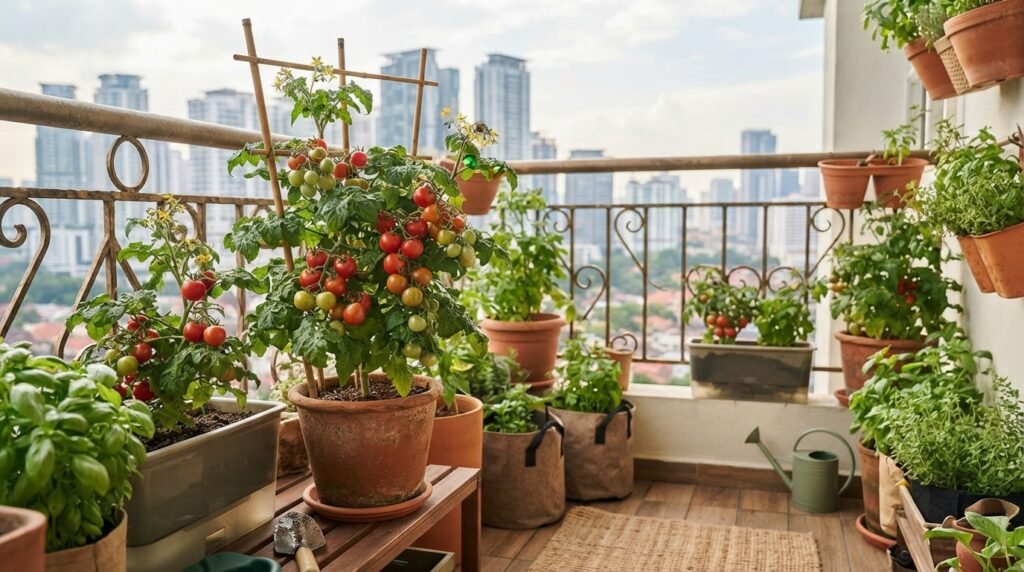
Grow Tomatoes on a Small Balcony is easier than you might think. With the right tomato varieties, suitable containers, and a few simple gardening techniques, even a compact condo balcony in Kuala Lumpur can become a productive mini vegetable garden.
The key to successfully learning how to Grow Tomatoes on a Small Balcony in Malaysia’s hot, humid climate is to maximize available sunlight, maintain consistent soil moisture, ensure proper drainage, and protect plants from excessive afternoon heat and heavy rainfall.
If you want to Grow Tomatoes on a Small Balcony, cherry tomato varieties are a surprisingly adaptable choice for container gardening. Their relatively small fruits, manageable growth habits, and potential to produce generous harvests make them practical for small outdoor spaces. With sufficient root room, good-quality potting mix, and regular feeding, you can enjoy fresh, homegrown tomatoes just a few steps from your kitchen.
Whether you have a narrow condo balcony or a tiny outdoor patio, these seven easy methods will help you grow healthy tomato plants while making the most of your available space.
Key Takeaways
- Choose cherry tomatoes: They are generally better suited to Malaysia’s hot conditions than many large-fruited varieties.
- Use deep containers: Choose pots at least 30 cm deep to support healthy root development.
- Maximize sunlight: Aim for approximately 6–8 hours of direct sunlight daily when possible, while protecting plants from extreme afternoon heat.
- Ensure proper drainage: Heavy tropical rainfall can waterlog containers and damage tomato roots.
- Water consistently: Keep the soil moist without allowing it to remain permanently wet.
- Feed appropriately: Use balanced fertilizer during early growth and a tomato-specific formula during flowering and fruiting.
- Grow vertically: Stakes and compact trellises help maximize limited balcony space.
1. How to Grow Tomatoes on a Small Balcony
Selecting the right tomato variety is the first step toward a successful balcony garden. Not all tomatoes perform equally well in containers, particularly in tropical locations such as Kuala Lumpur, where high temperatures and humidity can affect flowering, pollination, and fruit production.
Large beefsteak tomatoes often require more growing space and consistent environmental conditions. They may also struggle with heat stress and excessive humidity.
Cherry tomatoes are generally a better starting point when you Grow Tomatoes on a Small Balcony. Their smaller fruits develop relatively quickly, and suitable varieties can produce generous harvests even when grown in containers.
Tomato varieties worth considering include:
- Heat-tolerant cherry tomatoes: Look for varieties specifically described by seed suppliers as suitable for tropical climates or warm-weather growing.
- Red cherry tomatoes: A practical choice for beginners, these varieties are widely recognized for their small, round fruits.
- Yellow or orange cherry tomatoes: These add different flavors and colors to your harvest, although heat tolerance depends on the individual variety.
- Compact or dwarf cherry tomatoes: These are especially useful when balcony floor space is limited.
Popular varieties such as Sweet 100 and Sun Gold may also be worth trying. However, their performance in Kuala Lumpur depends on local growing conditions. Tiny Tim and Patio Choice are other compact options, although you should check their suitability for tropical heat before purchasing.
When shopping for tomato seeds, prioritize varieties advertised as heat-tolerant and suitable for container gardening. Remember that local availability and growing performance can vary.
If you’re new to gardening, Grow Tomatoes on a Small Balcony by starting with just one or two plants. This makes watering, pruning, and pest management easier while allowing you to understand how sunlight, heat, and rainfall affect your particular balcony.
2. Choose the Right Containers for Growing Tomatoes on a Small Balcony
The right container can make a significant difference to tomato plant health and productivity. Tomatoes develop substantial root systems, so small decorative pots can restrict root development and reduce fruit production.
Choose containers that are at least 30 cm deep. For standard cherry tomato varieties, a capacity of approximately 15–25 liters is a useful starting point.
Larger containers offer several advantages:
- They provide more room for healthy root development.
- They hold more soil and retain moisture more evenly.
- They reduce how quickly the growing medium dries out.
- They provide greater stability for developing plants.
When you Grow Tomatoes on a Small Balcony in Kuala Lumpur, these benefits are particularly useful, as hot afternoons can cause smaller containers to dry out quickly.
Suitable containers for balcony tomatoes include:
- Plastic gardening pots
- Fabric grow bags
- Large terracotta containers
- Food-safe buckets with drainage holes
- Rectangular balcony planters with sufficient depth
Good drainage is essential when you Grow Tomatoes on a Small Balcony, regardless of the container material. Every pot should have several drainage holes at the bottom so excess water can escape.
When you Grow Tomatoes on a Small Balcony in Kuala Lumpur, consider placing containers on raised pot stands because of the frequent afternoon showers. This helps prevent drainage holes from becoming blocked and reduces the risk of water collecting underneath the pots.
Avoid leaving tomato plants sitting in saucers filled with water. Permanently wet roots can develop fungal problems and eventually rot.
When you Grow Tomatoes on a Small Balcony, choosing suitable containers from the beginning is one of the simplest ways to prevent common growing problems.
3. Prepare the Best Soil Mix for Healthy Tomato Growth
Healthy tomato plants need a growing medium that provides nutrients, retains sufficient moisture, and allows excess water to drain freely.
Regular garden soil is usually unsuitable for balcony tomato gardening. Inside containers, it can become compacted, restricting airflow around the roots and preventing proper drainage.
Instead, use a lightweight, nutrient-rich potting mix designed for container vegetables.
To Grow Tomatoes on a Small Balcony, you can prepare your own growing medium using a simple homemade mixture that includes:

- 40% quality potting soil
- 30% coco peat
- 20% compost
- 10% perlite or another suitable drainage material
This combination provides a useful balance of moisture retention, nutrients, and root aeration.
Each ingredient serves a different purpose:
- Potting soil: Provides the main growing medium and helps support the plant.
- Coco peat: Helps retain moisture, which is particularly useful during hot weather.
- Compost: Supplies organic matter and supports healthy plant development.
- Perlite: Improves aeration and drainage, helping prevent waterlogged roots.
Before planting, mix the ingredients thoroughly and fill your container, leaving approximately 3–5 cm of space below the rim. This makes watering easier and helps prevent soil from spilling over during heavy rainfall.
When you Grow Tomatoes on a Small Balcony, avoid using fresh, uncomposted manure. It can damage young roots and introduce unwanted pathogens.
A lightweight potting mix also makes containers easier to move when storms approach, an important consideration when growing tomatoes on a small balcony.
4. Give Your Tomato Plants Enough Sunlight
Sunlight is essential for growing strong tomato plants and encouraging healthy flowering and fruit development. Ideally, tomatoes receive approximately 6–8 hours of direct sunlight each day.
However, this recommendation needs some adjustment for Kuala Lumpur’s tropical climate. Some condo balconies cannot provide six hours of direct sunlight, while west-facing balconies may receive intense afternoon heat that scorches leaves and stresses developing fruits.
An east-facing balcony is often a convenient location to Grow Tomatoes on a Small Balcony. It typically receives morning sunlight while avoiding some of the strongest afternoon heat.
If your balcony faces west, monitor your plants carefully when you Grow Tomatoes on a Small Balcony. Strong afternoon sunlight, combined with hot concrete floors and reflective walls, can create excessive temperatures around the leaves and containers.
When you Grow Tomatoes on a Small Balcony, here are some practical ways to manage sunlight and heat:
- Position pots where they receive bright morning sunlight.
- Avoid placing plants directly against hot walls.
- Use light-colored containers to reduce heat absorption.
- Rotate pots occasionally to encourage balanced growth.
- Consider 30–50% shade cloth during particularly intense afternoon conditions.
- Avoid placing plants in deep shade simply to escape the heat.
If your balcony receives fewer than six hours of direct sunlight, choose a compact, heat-tolerant cherry tomato variety and make the most of the available morning light.
A suitable full-spectrum grow light may help supplement insufficient natural light. However, artificial lighting cannot fully compensate for poor growing conditions or excessive heat.
To Grow Tomatoes on a Small Balcony successfully, find the right balance between sufficient sunlight and protection from Kuala Lumpur’s tropical temperatures.
5. Water Tomato Plants Correctly During Hot and Rainy Weather
Watering can be challenging in Malaysia because hot weather and sudden afternoon showers create constantly changing moisture conditions.
Tomato plants need consistent soil moisture, particularly during flowering and fruit development. However, too much water can cause root problems and encourage fungal diseases.
Rather than following a rigid watering schedule, check the soil before adding more water.
When you Grow Tomatoes on a Small Balcony, insert your finger approximately 2–3 cm into the soil. If the top layer feels dry, water thoroughly until excess moisture begins draining from the bottom of the container.
During particularly hot periods, your tomato plants may need watering every day. On rainy days, they may require little or no additional water.
Follow these six practical watering tips:
- Water in the morning: This gives plants access to moisture before temperatures rise.
- Water the soil directly: Avoid wetting the leaves whenever possible.
- Avoid shallow watering: Water thoroughly rather than applying small amounts frequently.
- Check containers after heavy rain: Make sure the soil is not excessively saturated.
- Keep drainage holes clear: Allow excess water to escape freely.
- Apply mulch: Reduce moisture loss and help maintain more consistent soil conditions.
Organic mulch, such as dried leaves or clean straw, can help maintain soil moisture during hot weather. Apply a thin layer around the plant, keeping it away from the main stem.
If you Grow Tomatoes on a Small Balcony, consistent watering can also help reduce fruit problems such as blossom-end rot and fruit cracking.
When growing tomatoes on a small balcony, checking soil moisture is particularly important because containers can become waterlogged during tropical downpours.
The goal is to maintain evenly moist soil without allowing the roots to sit in standing water.
6. Support Tomato Plants and Maximize Vertical Balcony Space
Limited floor space is one of the biggest challenges of growing vegetables in a condo. Fortunately, tomatoes can be trained to grow vertically, making them suitable for narrow balconies and compact outdoor areas.

Use bamboo stakes, tomato cages, or compact trellises to support plants as you Grow Tomatoes on a Small Balcony.
When you Grow Tomatoes on a Small Balcony, vertical supports offer several benefits:
- They prevent branches from falling under the weight of developing fruit.
- They help keep foliage off the ground.
- They improve airflow around leaves and stems.
- They make watering, pruning, and harvesting easier.
- They allow you to use limited balcony space more efficiently.
When you Grow Tomatoes on a Small Balcony, select supports that are sturdy enough to withstand strong winds and heavy rain.
Try these space-saving balcony gardening ideas:
- Place individual pots along balcony railings, ensuring they are securely positioned.
- Install vertical trellises against suitable walls.
- Grow compact varieties in rectangular planters.
- Arrange plants on sturdy stands at different heights.
- Use hanging arrangements only for suitable compact varieties and securely supported containers.
Avoid overcrowding your tomato plants. Good airflow helps leaves dry faster after rainfall and reduces the likelihood of fungal infections.
Grow Tomatoes on a Small Balcony also involves understanding pruning requirements, which depend on the tomato variety. For indeterminate cherry tomato varieties, remove unnecessary lower leaves and manage excessive side shoots when appropriate. Compact determinate varieties generally need less pruning.
Safety is equally important when gardening on an elevated balcony. Keep containers securely positioned away from balcony edges, and ensure trellises and other supports cannot become unstable during strong winds.
Using vertical supports is one of the easiest ways to grow tomatoes on a small balcony without sacrificing valuable walking space.
7. Feed Tomato Plants Regularly and Protect Them from Pests
Tomato plants need a steady supply of nutrients throughout their growing cycle. Although compost provides a useful nutritional foundation, container-grown tomatoes eventually use up the nutrients available in their limited growing medium.
Choosing the right fertilizer at each growth stage can help support healthy foliage, flowering, and fruit production.
Grow Tomatoes on a Small Balcony successfully by using a balanced vegetable fertilizer, such as an NPK 10-10-10 formula, during early growth. This provides relatively balanced amounts of nitrogen, phosphorus, and potassium to support foliage and root development.
Once flowering begins, switch to a tomato or fruiting-vegetable fertilizer with relatively less nitrogen and more potassium. For example, an NPK 5-10-10 formula is one commonly used type of fruiting fertilizer.
These figures represent the relative proportions of the three primary nutrients, not a universal formula for every tomato variety. Always follow the manufacturer’s recommended application rate and frequency because fertilizer concentrations vary.
Avoid excessive nitrogen. Too much nitrogen can encourage lush green foliage at the expense of flowers and fruit.
Common Tomato Pests to Watch For
Grow Tomatoes on a Small Balcony while keeping in mind that balcony-grown tomato plants can still attract pests, particularly in warm, humid conditions.
Common tomato pests include:
- Aphids
- Whiteflies
- Spider mites
- Caterpillars
- Thrips
Inspect your plants regularly, paying particular attention to the undersides of leaves, where many pests hide.
If you notice aphids or whiteflies while you Grow Tomatoes on a Small Balcony, remove heavily affected leaves when appropriate and wash small infestations away with a gentle stream of water. Insecticidal soap labeled for edible plants can also help when applied according to the product instructions.
How to Prevent Fungal Diseases
When you Grow Tomatoes on a Small Balcony in Kuala Lumpur, humidity creates additional challenges. Fungal diseases may develop when foliage remains wet for extended periods, particularly when plants are crowded or poorly ventilated.
Reduce disease risks with these simple practices:
- Avoid watering directly onto leaves.
- Remove dead or diseased foliage.
- Maintain sufficient spacing between plants.
- Provide good air circulation.
- Protect containers from excessive rainfall.
- Clean gardening tools between plants.
Grow Tomatoes on a Small Balcony by checking your tomato plants several times a week. Early intervention is usually much easier than dealing with a serious pest infestation or disease problem.
Regular feeding and pest inspections are essential for maintaining healthy tomato plants and enjoying a productive balcony garden throughout the growing season.
How Long Does It Take to Harvest Balcony Tomatoes?
One of the most rewarding parts of growing tomatoes on a small balcony is watching tiny flowers develop into fresh, edible fruits.
Depending on the variety and growing conditions, cherry tomatoes may begin producing ripe fruits approximately 60–85 days after transplanting.

Grow Tomatoes on a Small Balcony with a timeline that varies according to several factors, including:
- Tomato variety
- Available sunlight
- Temperature
- Nutrient availability
- Watering consistency
- Successful pollination
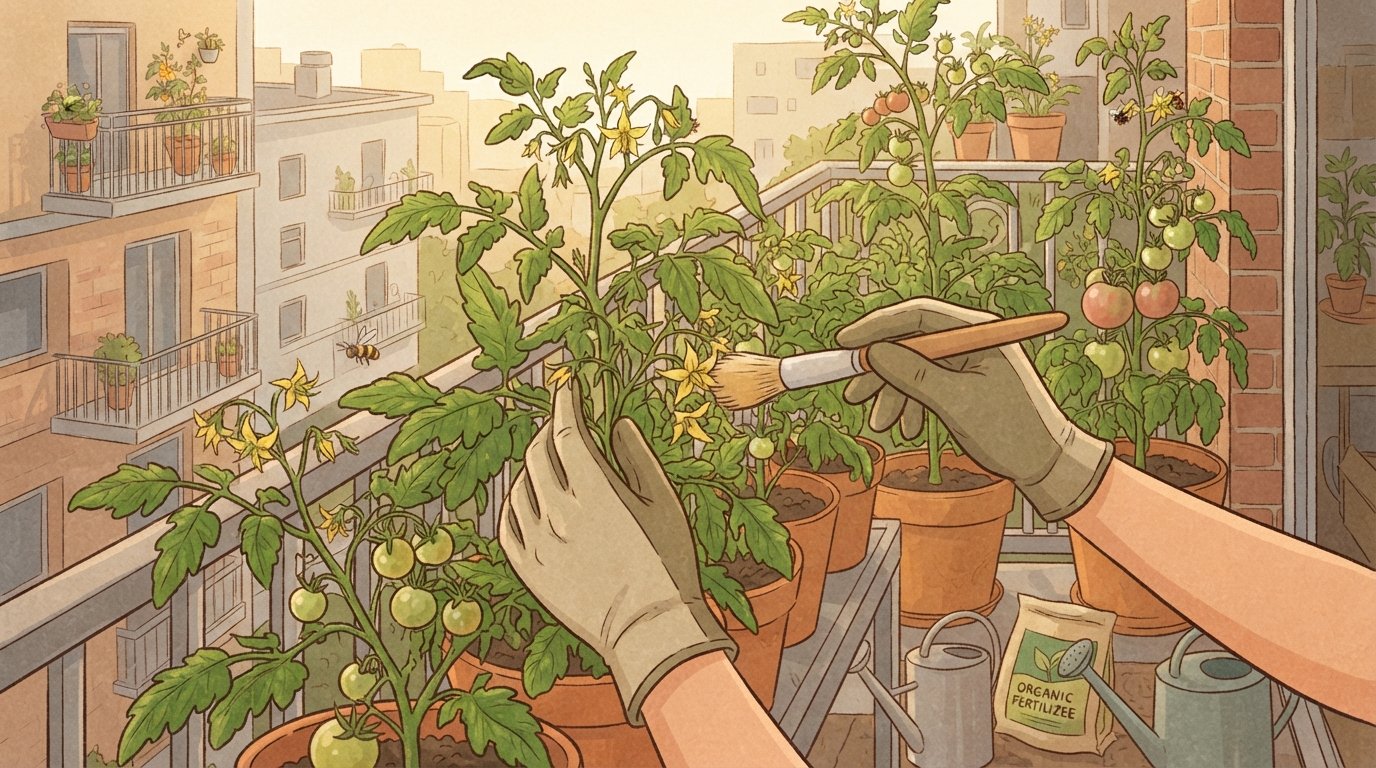
Tomato plants generally produce yellow flowers before fruit development. Each successfully pollinated flower can develop into a small tomato.
If your balcony has limited insect activity, you can encourage pollination by gently shaking flowering branches or lightly tapping flower clusters.
As the fruits develop, monitor their color and firmness. Harvest tomatoes when they reach their mature color and feel slightly firm. Picking ripe fruits regularly also encourages continued harvesting.
Grow Tomatoes on a Small Balcony in tropical climates by avoiding leaving ripe tomatoes exposed to intense sunlight for too long, as excessive heat can affect fruit quality.
With consistent care and suitable growing conditions, even a small condo balcony can provide a satisfying supply of fresh cherry tomatoes.
Frequently Asked Questions (FAQ)
1. Can I grow tomatoes on a small condo balcony in Kuala Lumpur?
Yes. Cherry tomatoes are particularly suitable for small condo balconies because they can grow successfully in containers and generally handle Malaysian heat better than many large-fruited varieties.
Choose a sunny location, use pots at least 30 cm deep, and provide good drainage to manage tropical rainfall. Starting with one or two plants is a practical way to learn how to manage your balcony garden.
2. How many tomato plants can I grow on a small balcony?
Grow Tomatoes on a Small Balcony in a compact space by starting with one or two tomato plants. Each plant needs sufficient room for its roots, foliage, and supporting structure.
Avoid overcrowding your containers when you Grow Tomatoes on a Small Balcony because restricted airflow can increase the risk of fungal diseases. The number of plants you can accommodate ultimately depends on your available floor space and the mature size of your chosen varieties.
3. Do tomatoes need direct sunlight every day?
Yes. If you Grow Tomatoes on a Small Balcony, tomatoes generally perform best with approximately 6–8 hours of direct sunlight daily.
However, in Kuala Lumpur, morning sunlight is often preferable to prolonged exposure to intense afternoon heat. If your balcony receives limited sunlight, choose a suitable compact variety and maximize the available natural light.
4. Can heavy rain damage balcony tomato plants?
Yes. Excessive rainfall can waterlog containers, damage flowers, and increase the risk of fungal diseases.
Grow Tomatoes on a Small Balcony using pots with sufficient drainage holes, raising containers off the floor, and moving plants under suitable shelter during prolonged heavy rain. Check the soil moisture before watering again after a downpour.
5. Why are my tomato plants growing lots of leaves but producing very few fruits?
Several factors can contribute to excessive leaf growth and poor fruit production, including:
- Excessive nitrogen fertilizer
- Insufficient sunlight
- Heat stress
- Poor pollination
Check your fertilizer formulation, improve sunlight exposure where possible, and encourage pollination by gently shaking flowering branches.
6. How often should I fertilize balcony tomatoes?
Fertilizing frequency depends on the fertilizer formulation and its nutrient concentration.
Grow Tomatoes on a Small Balcony with liquid fertilizers that may be applied weekly, while others are used every two to four weeks. Always follow the manufacturer’s recommended application rate and frequency to avoid overfertilizing your plants.
7. Can I grow tomatoes throughout the year in Malaysia?
Tomatoes can be grown during much of the year because Malaysia has a warm tropical climate. However, continuous year-round production is not guaranteed.
Monsoon rainfall, persistent humidity, fungal diseases, and high temperatures can significantly reduce flowering and fruit set.
Choose suitable varieties, maintain good drainage, and protect your plants during prolonged wet periods to improve their chances of producing healthy fruits.
Conclusion: Enjoy Fresh Tomatoes from Your Small Balcony
Learning how to grow tomatoes on a small balcony is a practical way to enjoy fresh produce, make better use of your outdoor space, and develop a rewarding gardening hobby.
Grow Tomatoes on a Small Balcony without needing a large garden or expensive equipment to get started. A few suitable containers, quality potting mix, sufficient sunlight, and regular maintenance can make a significant difference.
For condo residents in Kuala Lumpur, cherry tomatoes are an excellent starting point because suitable varieties can perform well in Malaysia’s warm climate and container-growing conditions.
Remember the essentials: choose pots at least 30 cm deep, maintain consistent soil moisture, provide good drainage, and protect your plants from excessive afternoon heat and heavy rainfall.
Start with one or two healthy tomato plants and discover what works best in your particular balcony environment. With patience and proper care, you could soon be enjoying fresh, homegrown cherry tomatoes just a few steps from your kitchen.
Related video
Further reading
Pingback: Herb Garden: 7 Easy Essential Tips - psimmarketing.com